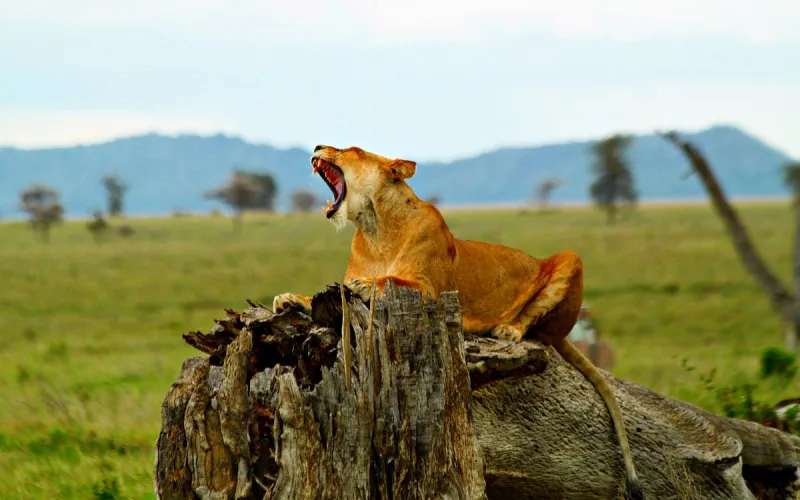
African Lion
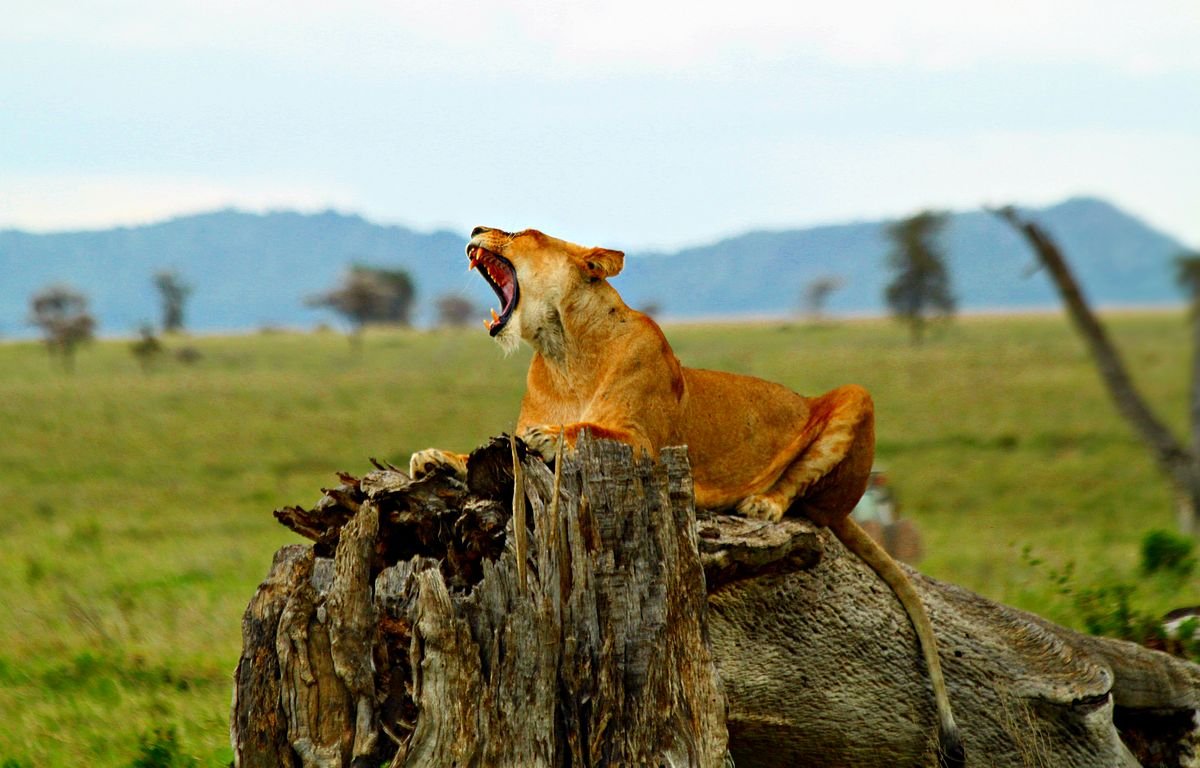
Panthera leo Simba
Tanzania is one of Africa’s great lion strongholds, with rewarding year-round viewing across both the northern and southern safari circuits.
Read field guide
Field notes from East Africa
Meet the mammals, birds, reptiles and other remarkable species that shape Tanzania's wild places. Learn how they live, where to look and when sightings are most rewarding.
Browse the guide
111 species
Panthera leo Simba
Tanzania is one of Africa’s great lion strongholds, with rewarding year-round viewing across both the northern and southern safari circuits.
Read field guideLoxodonta africana Tembo / Ndovu
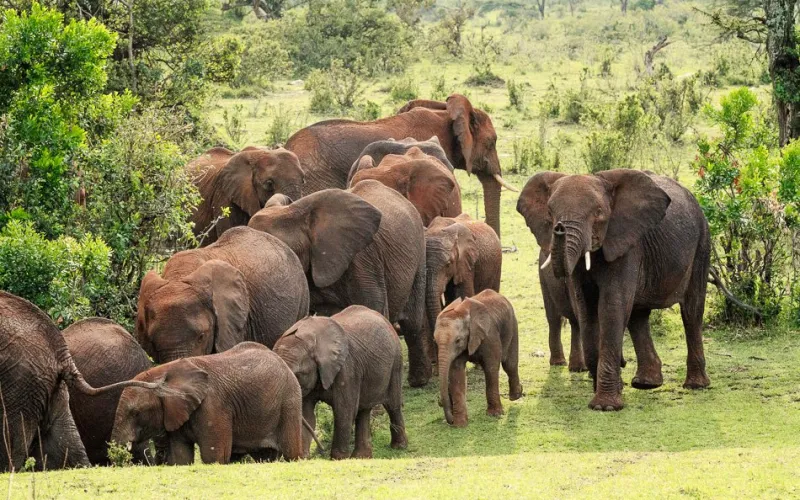
Tanzania’s elephants shape woodlands, open waterholes and create pathways used by many other species.
Read field guideConnochaetes taurinus Nyumbu
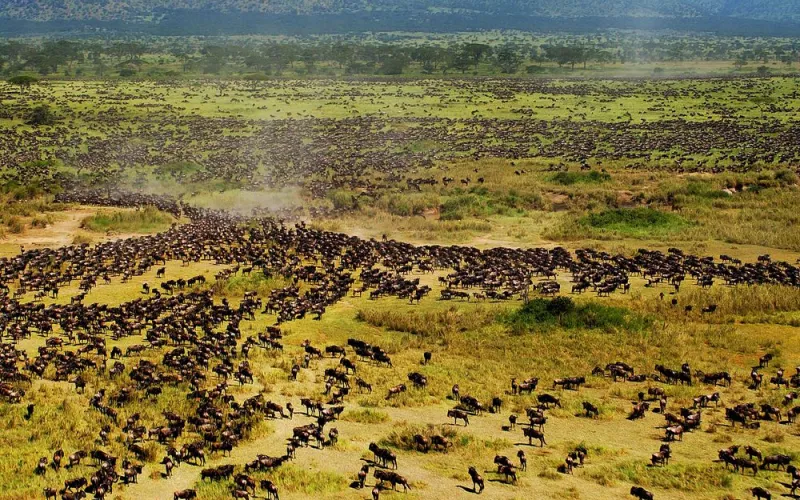
The engine of the Great Migration: more than a million wildebeest follow rain and fresh grass through the greater Serengeti ecosystem.
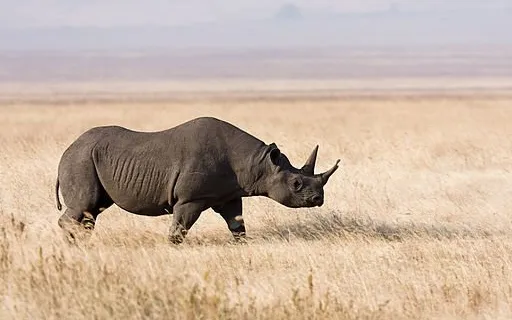
Read field guideDiceros bicornis michaeli Faru
A rare conservation success and one of Tanzania’s most treasured sightings, especially on the Ngorongoro Crater floor.
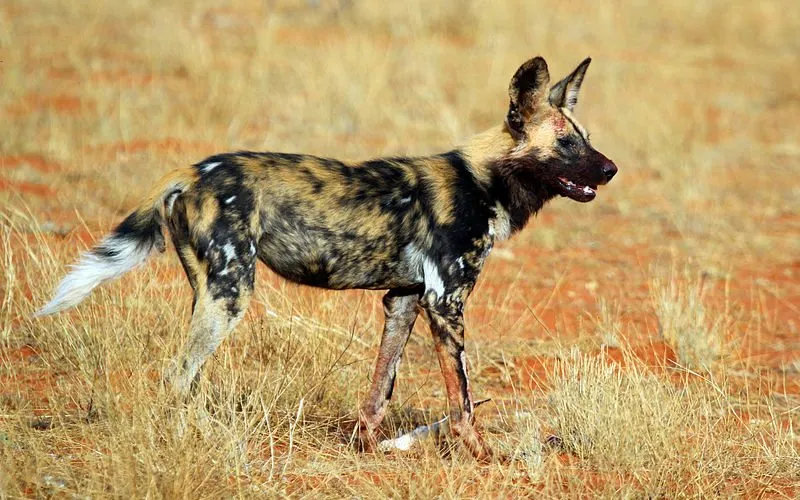
Read field guideLycaon pictus Mbwa mwitu
A rare, wide-ranging pack hunter for which southern Tanzania remains one of Africa’s most important landscapes.
Read field guidePan troglodytes schweinfurthii Sokwe mtu
A highly intelligent great ape of western Tanzania’s Lake Tanganyika forests, encountered on guided forest treks rather than a vehicle safari.
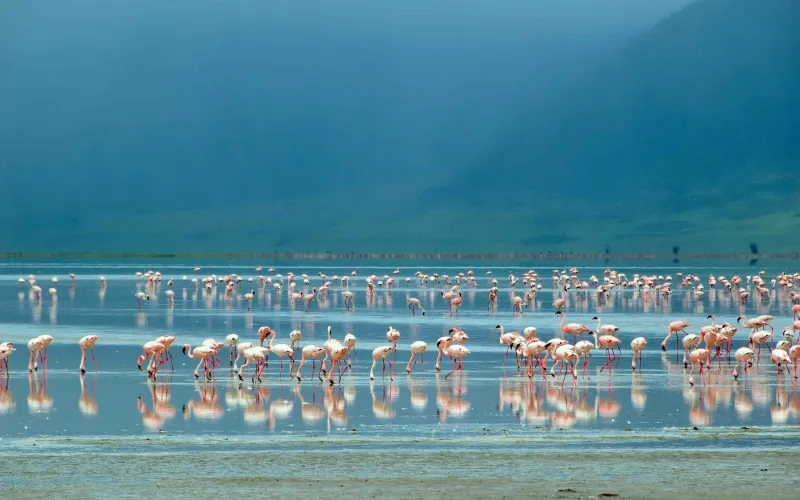
Read field guidePhoeniconaias minor Heroe mdogo
East Africa’s small, deep-pink flamingo, with Lake Natron providing its most important regional breeding habitat.
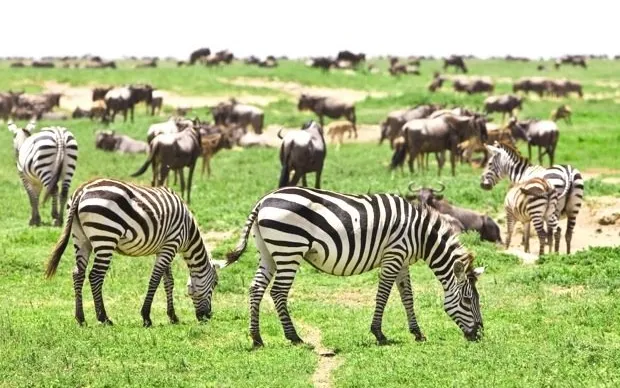
Read field guideEquus quagga Punda milia
A familiar but endlessly photogenic grazer, often moving with wildebeest across the Serengeti and gathering at Tanzania’s dry-season water sources.
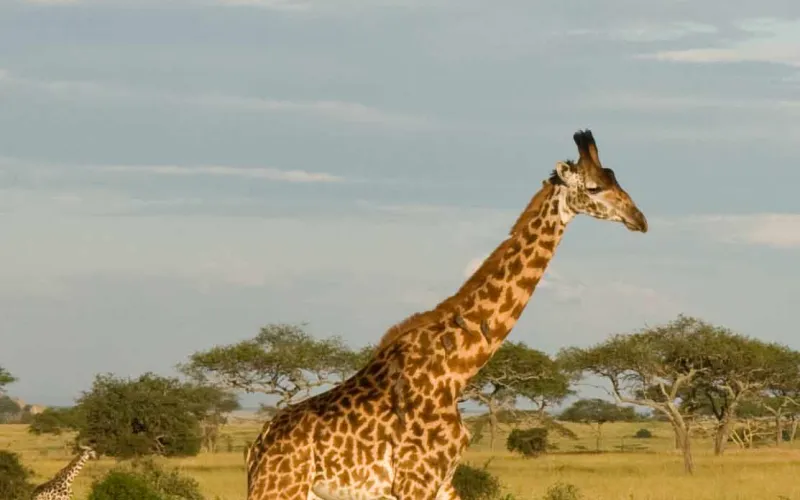
Read field guideGiraffa tippelskirchi Twiga
Tanzania’s national animal, recognised by irregular, vine-leaf patches that extend down its legs.
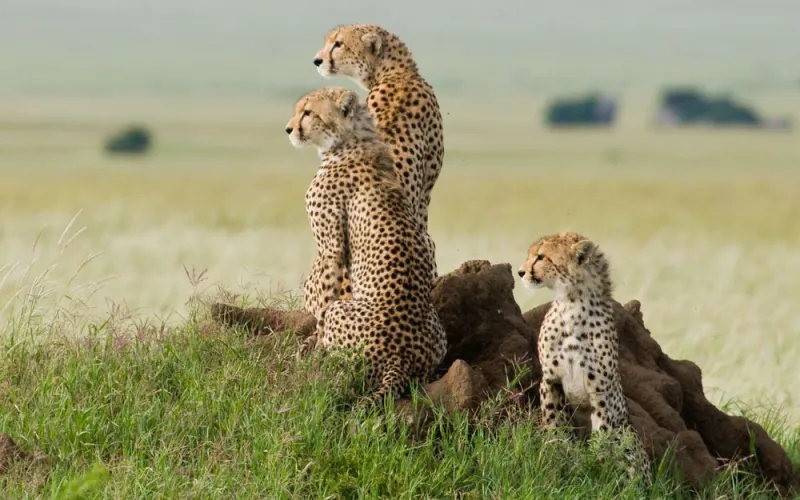
Read field guideAcinonyx jubatus Duma
A daylight hunter built for acceleration, best watched on the open Serengeti and Ndutu plains.
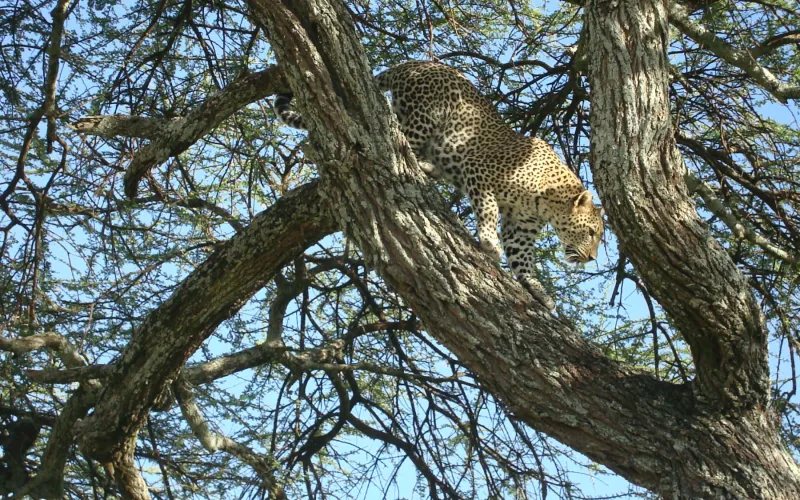
Read field guidePanthera pardus pardus Chui
An elusive, adaptable cat most often found by scanning river trees, kopjes and woodland margins.
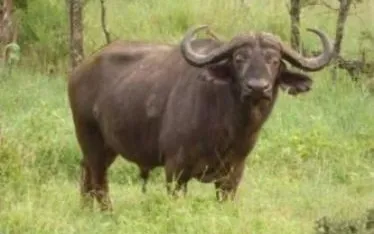
Read field guideSyncerus caffer Nyati / Mbogo
Powerful herd animals that gather in impressive numbers on floodplains, woodland edges and near permanent dry-season water.
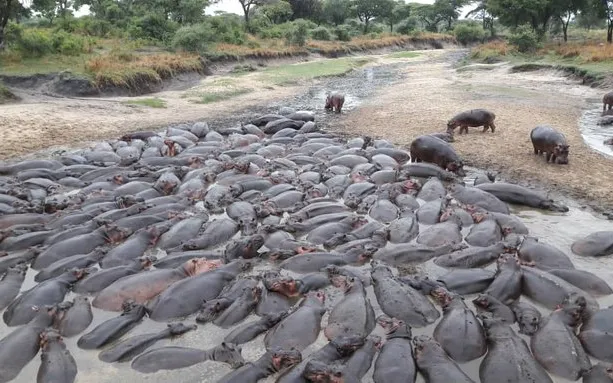
Read field guideHippopotamus amphibius Kiboko
A river and lake giant that spends hot days in water, then comes ashore after dark to graze.
Read field guideCeryle rudis
A bold black-and-white fishing bird, frequently seen hovering above Tanzania’s lakes and rivers before plunging after prey.
Read field guideCrocodylus niloticus Mamba
Africa’s largest freshwater predator, central to river safaris and the drama of Serengeti migration crossings.
Read field guideMalacochersus tornieri
A small, critically endangered East African tortoise whose unusually flat, flexible shell lets it disappear into narrow rocky crevices.
Read field guideCrocuta crocuta Fisi madoa
Tanzania’s most numerous large carnivore and a formidable hunter in its own right, not merely the scavenger of safari legend.
Read field guideHyaena hyaena Fisi milia
A shy, shaggy night-walker of the drier north and centre — one of the genuinely rare sightings on a Tanzanian safari.
Read field guideLeptailurus serval Mondo
A long-legged, huge-eared small cat that hunts rodents in long grass by sound alone — best looked for in the Ngorongoro highlands.
Read field guideCaracal caracal Simbamangu
A powerful russet cat with black ear tufts, capable of taking birds out of the air in a standing leap of three metres.
Read field guideLupulella mesomelas Bweha nyekundu
The alert, rust-and-silver jackal of the open plains — a constant presence at Serengeti and Ngorongoro kills.
Read field guideLupulella adusta Bweha miraba
A quieter, greyer jackal of woodland and moist country, most likely in Nyerere and the southern circuit.
Read field guideCanis lupaster Bweha wa dhahabu
The "golden jackal" of the Ngorongoro Crater — reclassified in 2015 as a wolf, and found in Tanzania almost only here.
Read field guideOtocyon megalotis Bweha masikio
A tiny insect-eating fox with enormous ears, listening for harvester termites beneath the short-grass plains.
Read field guideMellivora capensis Nyegere
Small, stocky and famously fearless — a badger that will stand its ground against animals many times its size.
Read field guideHelogale parvula Nguchiro mdogo
Africa’s smallest carnivore, living in termite mounds in tight cooperative packs — a Tarangire favourite.
Read field guideMungos mungo Nguchiro miraba
Noisy, busy troops of twenty or more sweeping through camp and woodland, backs barred with dark stripes.
Read field guideGenetta maculata Kanu
A slender, cat-like climber with a spotted coat and a banded tail — the small carnivore most often seen around lodge lights.
Read field guidePhacochoerus africanus Ngiri
The kneeling grazer of the open plains, tail held vertical as a family trots away — present in every Tanzanian savanna park.
Read field guidePotamochoerus larvatus Nguruwe mwitu
A shaggy, red-brown nocturnal pig of thick riverine bush — heard crashing away far more often than it is seen.
Read field guideEudorcas thomsonii Swala tomi
The tail-flicking "tommie" of the short-grass plains — the Serengeti’s most abundant gazelle and the staple prey of the cheetah.
Read field guideNanger granti Swala granti
Larger and paler than the "tommie", with long lyre-shaped horns and no need to drink — it stays on the plains when others leave.
Read field guideAepyceros melampus Swala pala
The elegant, athletic antelope of the woodland edge — abundant in almost every Tanzanian park and able to leap ten metres in one bound.
Read field guideMadoqua kirkii Dikidiki / Digidigi
A knee-high antelope with an elongated flexible snout, living in lifelong pairs in dry thicket — Tarangire and Manyara are excellent for it.
Read field guideOreotragus oreotragus Mbuzi mawe
A rock specialist that stands on the tips of its hooves, balanced on outcrops in the Serengeti kopjes and Ruaha’s hills.
Read field guideOurebia ourebi Taya
A slender golden grassland antelope with a black tail tip and a bare dark patch below the ear — a Serengeti grassland speciality.
Read field guideRaphicerus campestris Dondoro
A neat, bright-rufous dwarf antelope with huge dark eyes and outsized ears, always alone and always alert.
Read field guideRedunca redunca Tohe
A shaggy, buff antelope of damp grassland and reedbeds, the male’s horns hooked sharply forward at the tips.
Read field guideTragelaphus sylvaticus Pongo / Mbawala
A solitary, richly marked forest antelope — the most widespread antelope in Africa and a regular in Manyara’s groundwater forest.
Read field guideCephalophus natalensis Funo
A deep chestnut forest dwarf antelope that dives into cover at the first sound — the "duiker" name means diver.
Read field guideCephalophus harveyi
An East African forest duiker with a dark face blaze and black legs — a speciality of Arusha National Park’s montane forest.
Read field guideTaurotragus oryx Pofu / Mbunju
The largest antelope on earth — a bull can exceed 900 kg, yet still clear a two-metre fence from standing.
Read field guideTragelaphus strepsiceros Tandala mkubwa
The grey ghost of the woodland: a tall, striped antelope whose bulls carry the longest spiral horns of any animal.
Read field guideAmmelaphus imberbis Tandala mdogo
A smaller, finer, more heavily striped kudu of arid thornbush — shy, beautiful and largely restricted to Tanzania’s dry north and centre.
Read field guideOryx beisa callotis Choroa
A boldly masked desert antelope with rapier horns and tufted ear tips — Tarangire and Mkomazi are its Tanzanian strongholds.
Read field guideLitocranius walleri Swala twiga
The "giraffe-necked antelope", which stands upright on its hind legs to browse two metres above the ground.
Read field guideHippotragus equinus Korongo
A big, horse-like antelope with a black-and-white face mask and long tasselled ears — a prize of the southern and western woodlands.
Read field guideHippotragus niger Palahala / Mbarapi
Jet-black bulls with scimitar horns sweeping back over the shoulders — widely held to be Africa’s most handsome antelope.
Read field guideKobus ellipsiprymnus Kuro
A shaggy, water-loving antelope famous for the white ring on its rump — and for an oily coat with a smell all its own.
Read field guideKobus vardonii
A golden floodplain antelope of the Rufiji and Katavi wetlands — the northern edge of its world range is in Tanzania.
Read field guideDamaliscus lunatus jimela Nyamera
A glossy purple-sheened antelope that stands sentinel on termite mounds across the western and northern Serengeti.
Read field guideAlcelaphus buselaphus cokii Kongoni
The "kongoni" of the northern plains — a long-faced, high-shouldered grazer with sharply hooked horns.
Read field guideAlcelaphus lichtensteinii
The miombo hartebeest of southern and western Tanzania — richer in colour than the kongoni, with a dark saddle on the back.
Read field guidePapio anubis Nyani
The big, confident baboon of northern Tanzania — Lake Manyara holds some of the largest troops recorded anywhere in Africa.
Read field guidePapio cynocephalus Nyani manjano
The slighter, paler baboon of southern and western Tanzania, replacing the olive baboon south of the northern circuit.
Read field guideChlorocebus pygerythrus Tumbili
The grey, black-faced monkey of every Tanzanian camp — and the species that proved animals can have words for things.
Read field guideColobus guereza Mbega mweupe
A leaf-eating canopy monkey with a flowing white mantle and plumed tail — the flagship species of Arusha National Park.
Read field guideColobus angolensis
A black colobus with long white epaulettes on the shoulders, found in the forests of Mahale and Tanzania’s coastal belt.
Read field guidePiliocolobus tephrosceles Mbega mwekundu
A rufous-crowned canopy monkey of the western forests — endangered, and the chimpanzee’s principal prey at Mahale.
Read field guideCercopithecus mitis Kima
A dark, quiet forest guenon with a pale brow band — common in Manyara’s groundwater forest and on Mount Meru.
Read field guideCercopithecus ascanius
A small western-forest guenon with a startling white heart-shaped nose spot and a long chestnut tail.
Read field guideOtolemur crassicaudatus Komba
The thick-tailed bushbaby — a cat-sized nocturnal primate whose wailing call is the sound of a Tanzanian night.
Read field guidePolemaetus bellicosus
Africa’s largest eagle, powerful enough to take a small antelope — and now Endangered across its range.
Read field guideTerathopius ecaudatus
An almost tailless eagle that rocks side to side as it glides — one of the great sights of the Tanzanian sky.
Read field guideIcthyophaga vocifer Furukombe
The ringing, head-thrown-back cry of this white-headed eagle is the definitive sound of African water.
Read field guideSagittarius serpentarius
A crane-legged eagle that hunts on foot and kills snakes by stamping — striding the Serengeti plains in pairs.
Read field guideGyps rueppelli
The highest-flying bird ever recorded, and a Critically Endangered cornerstone of the Serengeti’s clean-up crew.
Read field guideGypohierax angolensis
A striking black-and-white vulture that lives mainly on the fruit of oil palms — the world’s only largely vegetarian raptor.
Read field guideLophaetus occipitalis
A small black eagle with a shaggy, wind-blown crest, perched patiently over grassland edges in the Ngorongoro highlands.
Read field guideButeo augur
A highland buzzard with a brick-red tail, hanging on the wind above the Ngorongoro crater rim.
Read field guideStephanoaetus coronatus
The most powerful eagle in Africa, hunting monkeys and small antelope inside the forest canopy.
Read field guideScotopelia peli
A huge ginger owl that fishes by night along the Rufiji — one of the most sought-after birds in Africa.
Read field guideFalco eleonorae
A slender Mediterranean falcon that winters in East Africa — an elegant seasonal visitor over Ruaha’s baobab country.
Read field guidePhoenicopterus roseus Heroe mkubwa
The taller, paler flamingo of the Rift Valley lakes, feeding in deeper water than its lesser cousin.
Read field guidePelecanus onocrotalus Mwari
A huge white waterbird that fishes cooperatively, herding shoals into the shallows in a coordinated crescent.
Read field guideMycteria ibis
A white stork with a deep yellow bill and crimson face, fishing by touch with one foot stirring the mud.
Read field guideEphippiorhynchus senegalensis
Africa’s tallest stork, with a scarlet-and-black bill topped by a bright yellow saddle — always in pairs on the floodplain.
Read field guideLeptoptilos crumenifer
The "undertaker bird" — bald, hunched and enormous, with one of the largest wingspans of any land bird.
Read field guidePlatalea alba
A white wading bird that sweeps its flattened spatula bill side to side through the shallows, feeling for prey.
Read field guideBalearica regulorum
A stately grey crane crowned with a halo of golden bristles — and the only crane in the world that roosts in trees.
Read field guideArdea goliath
The largest heron on earth, standing 1.5 metres tall and motionless in the shallows of the Great Ruaha.
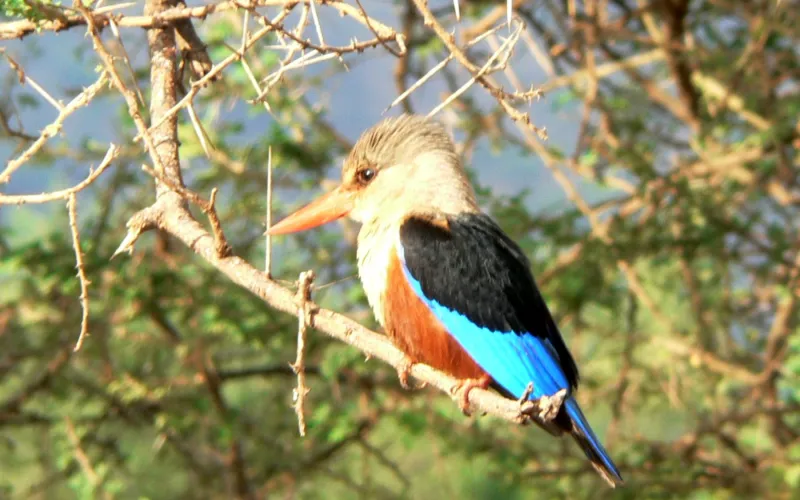
Read field guideMegaceryle maxima
Africa’s largest kingfisher, shaggy-crested and crow-sized, patrolling the forest streams of Mahale.
Read field guideRynchops flavirostris
A tern-like river bird that flies with its lower mandible slicing the water surface — a Rufiji speciality.
Read field guideVanellus albiceps
A sandbank wader with long yellow face wattles and a white crown stripe, always beside big rivers.
Read field guideMerops nubicoides
Brilliant crimson bee-eaters that nest in thousands of tunnels dug into Rufiji riverbanks.
Read field guideStruthio camelus Mbuni
The largest and fastest bird on earth, striding the open plains at up to 70 km/h.
Read field guideArdeotis kori
Probably the heaviest flying bird in the world — a stately grey giant that walks the plains and rarely flies.
Read field guideCoracias caudatus
The most photographed bird in East Africa — lilac, turquoise and cobalt, perched on a bare branch beside the track.
Read field guideLamprotornis superbus Kwenzi
Iridescent blue-green above and chestnut below, with a white breast band — the confiding starling of every northern lodge.
Read field guideLamprotornis unicolor
A Tanzanian endemic — a long-tailed, dusty-grey starling of baobab country, found nowhere else on earth.
Read field guideHisturgops ruficauda
A Tanzanian endemic weaver with pale scaled plumage, rufous wing panels and a startling pale blue eye.
Read field guideAgapornis fischeri
A tiny green parrot with an orange head and white eye-ring, endemic to northern Tanzania’s acacia belt.
Read field guideAgapornis personatus
A masked Tanzanian endemic — brown-black head, broad yellow collar and bright green body — at home in Tarangire’s baobabs.
Read field guideTrachyphonus erythrocephalus
A vivid spotted barbet that duets from a termite mound in a mechanical "red-n-yellow, red-n-yellow" chant.
Read field guideTrachyphonus vaillantii
A stocky yellow-and-red barbet whose long trilling call, like an alarm clock, runs for minutes without a pause.
Read field guideTockus deckeni
A black-and-white hornbill whose male carries a brilliant red-and-ivory bill — and which works with mongooses for mutual safety.
Read field guideTockus ruahae
A Tanzanian endemic described only in 2000, centred on the Ruaha valley and found essentially nowhere else.
Read field guidePternistis rufopictus
A Tanzanian endemic gamebird whose entire world range lies within the greater Serengeti ecosystem.
Read field guideMacronyx croceus
A grassland bird with a vivid yellow throat framed by a black necklace — brilliant when it turns to face you.
Read field guideAcryllium vulturinum
The largest and most spectacular guineafowl — cobalt-blue breast hackles and a bare vulture-like head, in Mkomazi’s dry bush.
Read field guideBycanistes brevis
A big forest hornbill with a huge cream casque, whose wingbeats sound like a steam train over the canopy.
Read field guideTauraco rossae
A glossy violet-blue turaco with a crimson crest and crimson wing flashes — a highlight of Mahale’s forests.
Read field guideTauraco hartlaubi
A deep green highland turaco with a white eye-line and crimson wings, in the montane forest of Mount Meru.
Read field guideApaloderma narina
A brilliant emerald-and-crimson forest bird that sits so still, facing away, that it is almost impossible to see.
Read field guideGuttera pucherani
A forest guineafowl with a mop of curly black feathers on its head and startling red eyes.
Read field guideStigmochelys pardalis Kobe
Africa’s fourth-largest tortoise, its high domed shell patterned like a leopard’s coat — and a genuine "little five" species.
Read field guideDendroaspis polylepis
Africa’s longest venomous snake and its fastest — shy, alert and far less often encountered than its reputation suggests.
Read field guideBitis arietans Moma
A thick, superbly camouflaged ambush viper that relies on stillness — and is responsible for more snakebites than any other African species.
Read field guidePython sebae Chatu
Africa’s largest snake, reaching five metres or more, and one of the few reptiles that guards its own young.
Read field guideVaranus niloticus Kenge
Africa’s largest lizard — up to two metres of powerful swimmer, digger and raider of crocodile nests.
Read field guideFamily Cichlidae — Lake Tanganyika radiation
Around 250 fish species found nowhere else on earth, in the clearest water on the Mahale shore — snorkelling reveals them a metre from the beach.
Read field guideTry another name, park, habitat or wildlife group.
Explore by group
From guidebook to game drive
Our local safari planners will help you choose the right parks, season and route for the sightings that matter most to you.