Large Herbivores Mammal Vulnerable (IUCN)

Common Hippopotamus

Hippopotamus amphibius Kiswahili: Kiboko

A river and lake giant that spends hot days in water, then comes ashore after dark to graze.

Where to look
Rufiji River and lakes of Nyerere National Park Serengeti hippo pools Katavi National Park Lake Manyara and the Ngorongoro Crater Mikumi and Ruaha river systems
Best time
All year. June–October concentrates animals in remaining water and gives clear bank-side views.
Habitat
Permanent rivers, lakes and pools bordered by open grazing ground.
All Tanzania wildlife

Species profile

About the common hippopotamus

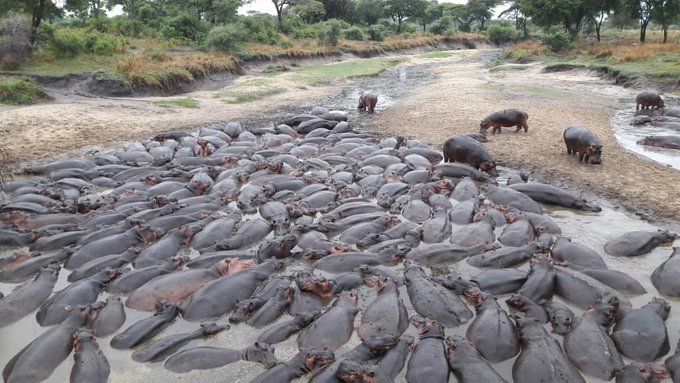
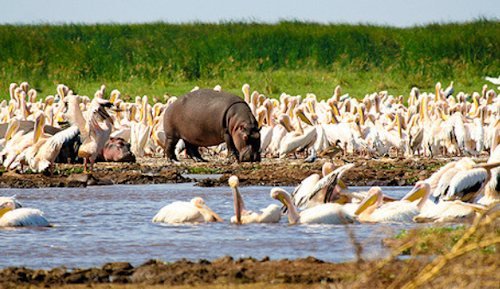
Hippos are semi-aquatic but feed mainly on land. By day they crowd into rivers, pools and lakes to stay cool and protect their skin; after sunset they follow well-used paths to grazing grounds.

Boat safaris in Nyerere reveal their aquatic social life, while Serengeti pools and Katavi’s shrinking dry-season waterholes can hold extraordinary concentrations.

Life in the wild

Behavior & relationships

Behavior

Rests in water during the day and grazes on land at night. Territorial males defend sections of water with yawns, splashing and dung-scattering displays.

Social life

Daytime pods contain females, young and a territorial male, but feeding ashore is mostly solitary. Mothers are highly protective of calves.

What makes it remarkable

Special features

Eyes, ears and nostrils sit high on the head for near-total submersion. Skin produces a natural reddish protective secretion.
From guidebook to game drive

Safaris that go where the common hippopotamus lives

All safaris

Matched on the parks this species is recorded in. A sighting is never guaranteed — these are simply the itineraries that put you in the right places.

See it responsibly

Plan a Tanzania safari around the wildlife you love.

Tell our Arusha team what you hope to see. We will match the season, parks and pace to your interests.