Large Herbivores Mammal Critically Endangered (IUCN)

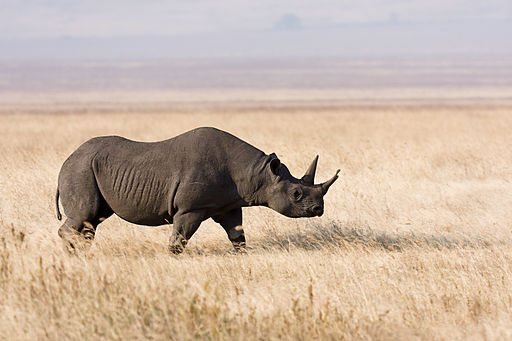
Eastern Black Rhinoceros

Diceros bicornis michaeli Kiswahili: Faru

A rare conservation success and one of Tanzania’s most treasured sightings, especially on the Ngorongoro Crater floor.

Where to look
Ngorongoro Conservation Area Serengeti ecosystem Mkomazi National Park Other intensively protected sites
Best time
Year-round in Ngorongoro. Early morning offers cool air, lower haze and the best chance of a clear long-distance view.
Habitat
Bushland, open woodland, scrub and grassland mosaics with browse, water and secure refuge.
All Tanzania wildlife

Species profile

About the eastern black rhinoceros

Black rhinos once ranged widely across Tanzania but were devastated by poaching. Intensive protection and monitoring now safeguard small, highly valuable populations. A sighting is never guaranteed and should be treated with patience and respect.

Despite the name, black rhinos are grey. The species is distinguished from the white rhino by its pointed, grasping upper lip, which is adapted for browsing shrubs.

Life in the wild

Behavior & relationships

Behavior

Often solitary and most active in cooler hours. Uses regular paths, dung middens and scent marking to communicate and define ranges.

Social life

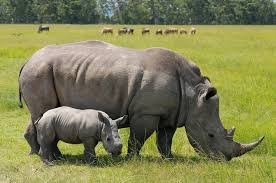
Adults are generally solitary; females maintain long bonds with calves, and neighbouring animals may tolerate overlapping ranges.

What makes it remarkable

Special features

Hooked upper lip, acute hearing and smell, and two keratin horns. Vision is comparatively limited.
From guidebook to game drive

Safaris that go where the eastern black rhinoceros lives

All safaris

Matched on the parks this species is recorded in. A sighting is never guaranteed — these are simply the itineraries that put you in the right places.

See it responsibly

Plan a Tanzania safari around the wildlife you love.

Tell our Arusha team what you hope to see. We will match the season, parks and pace to your interests.