Species profile
About the blue wildebeest
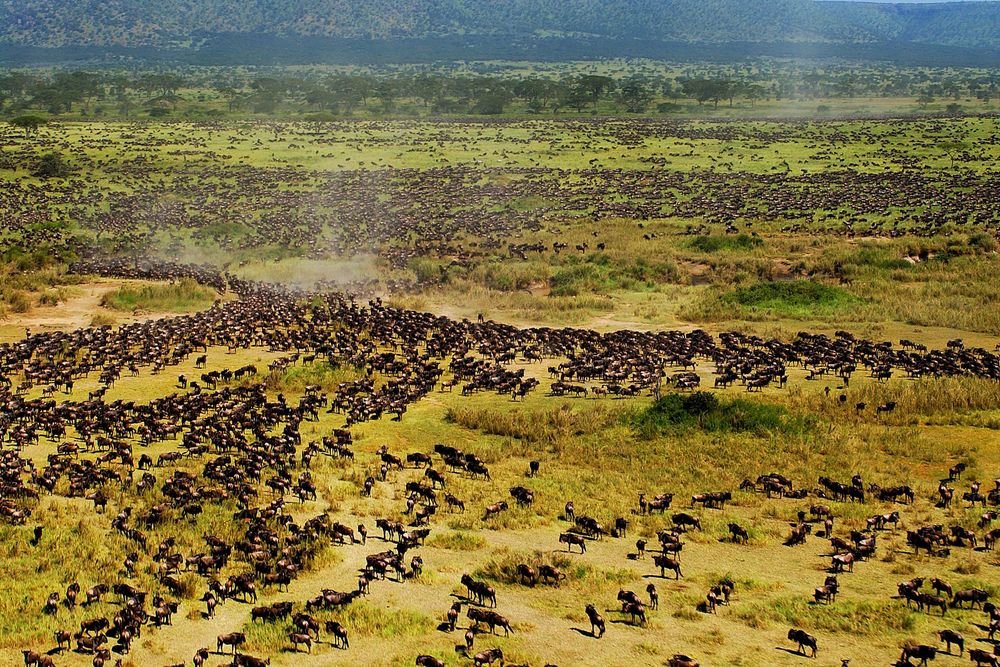
Blue wildebeest dominate the famous Great Migration, but the movement is a year-round cycle rather than a single event. Herds calve on the short-grass plains, move north and west as grazing changes, and eventually return south with the seasonal rains.
The animals are also resident in other Tanzanian ecosystems. Their grazing, births and deaths support predators, scavengers and the nutrient cycle of the plains.
Life in the wild
Behavior & relationships
Behavior
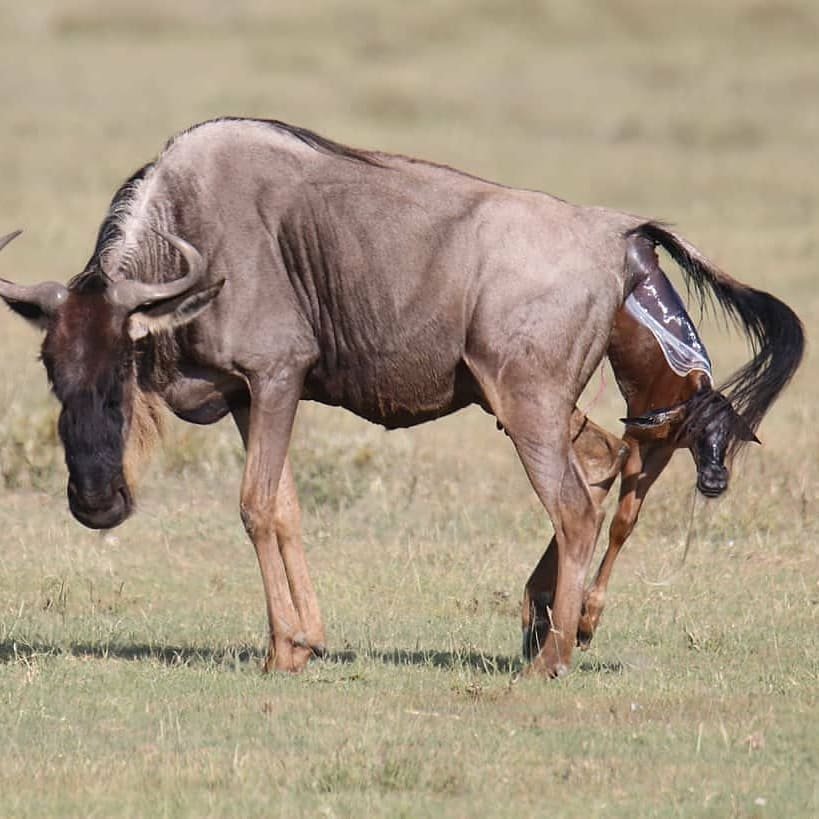
Highly mobile, alert herd grazers. Mass calving and synchronized movement reduce the risk faced by any one individual.
Social life
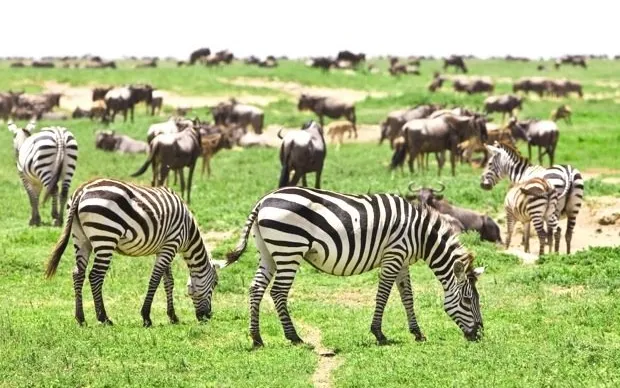
Form vast migratory aggregations as well as smaller bachelor and territorial groups. They commonly travel and graze alongside zebra.
What makes it remarkable
Special features
Broad muzzle, sloping back and durable legs suit continuous grazing and long seasonal journeys. Newborn calves can stand and run quickly.