Species profile
About the impala
The impala's success comes from flexibility. It grazes when grass is green and browses when it is not, which lets it live along the woodland-grassland edge all year where specialists must move. It is consequently one of the most abundant antelope in Tanzania and a key prey species for leopard, wild dog, cheetah and lion.
Alarmed impala explode in every direction in a series of enormous leaps — up to ten metres long and three metres high — a scattering display that makes it very hard for a predator to fix on one animal. Only males carry the long ridged lyre-shaped horns.
Life in the wild
Behavior & relationships
Behavior
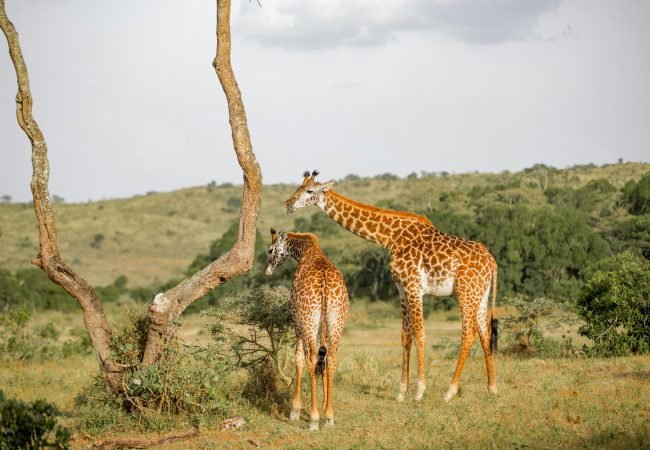
Diurnal and highly alert, often feeding alongside baboons and giraffe and relying on their alarm calls as well as its own.
Social life
Female herds of ten to a hundred, seasonally defended by a single territorial ram that roars and drives off rivals; other males form large bachelor herds.
What makes it remarkable
Special features
Leaps of up to ten metres, a black tuft of hair over a scent gland on each hind fetlock, and the black "M" on the rump that names it in many field guides.