Species profile
About the african wild dog
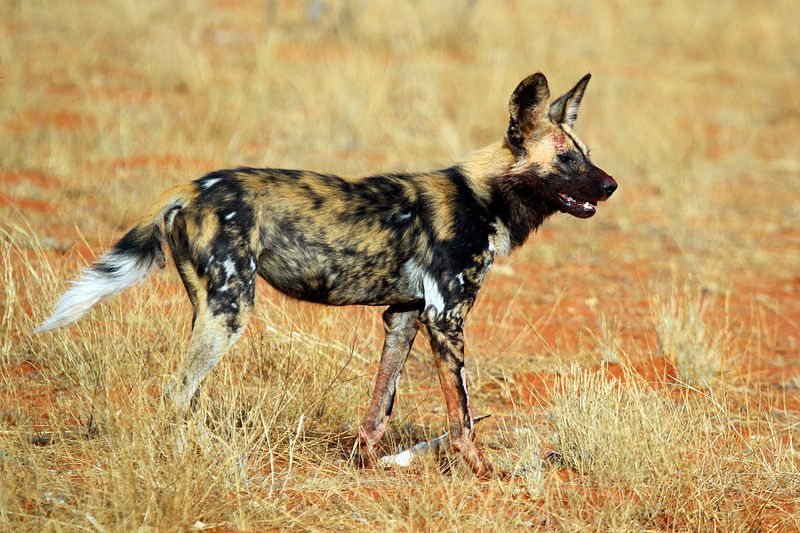
African wild dogs — also called painted dogs — are among safari’s most exciting and least predictable sightings. Packs cover enormous areas, so even healthy populations can disappear from view for days.
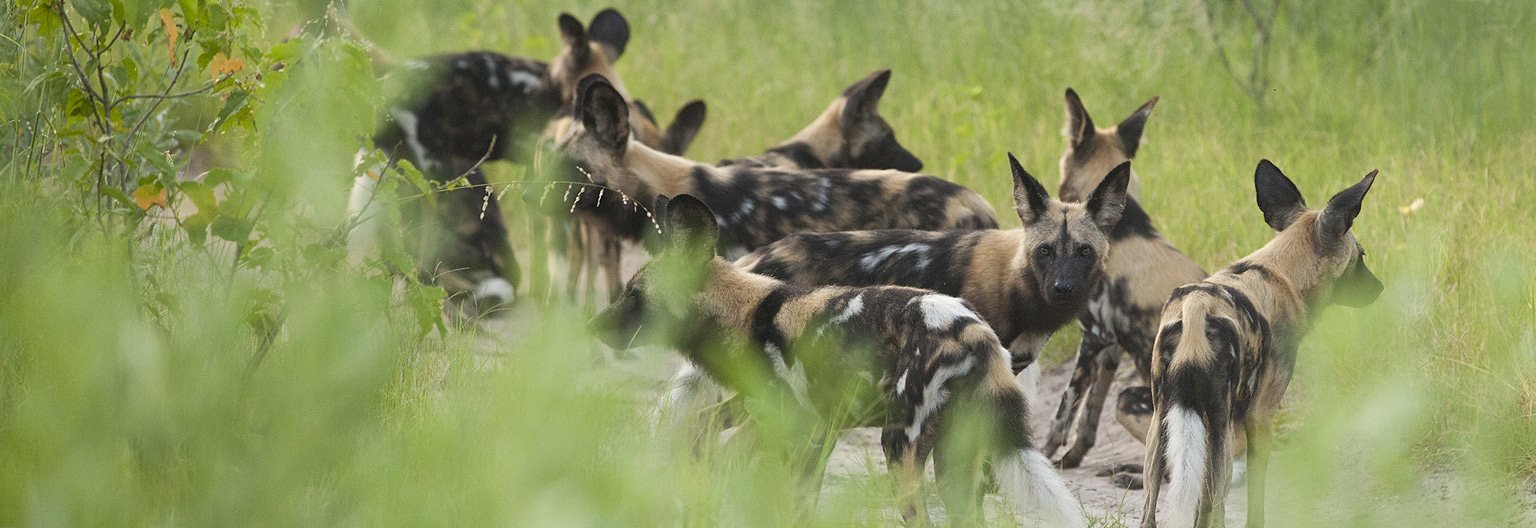
Nyerere and the wider Selous ecosystem are recognised strongholds. Wild dogs rely on cooperation: adults hunt together, share food and help care for pups and injured pack members.
Life in the wild
Behavior & relationships
Behavior
Mostly hunts around dawn and dusk using stamina, speed and coordinated pursuit. Packs rest socially and communicate with calls, gestures and scent.
Social life
Exceptionally cooperative packs usually breed through one dominant pair. Other adults provision pups, guard dens and support sick or injured members.
What makes it remarkable
Special features
Every coat is individually patterned. Long legs, large rounded ears and highly efficient pack cooperation support endurance hunting.