Species profile
About the african leopard
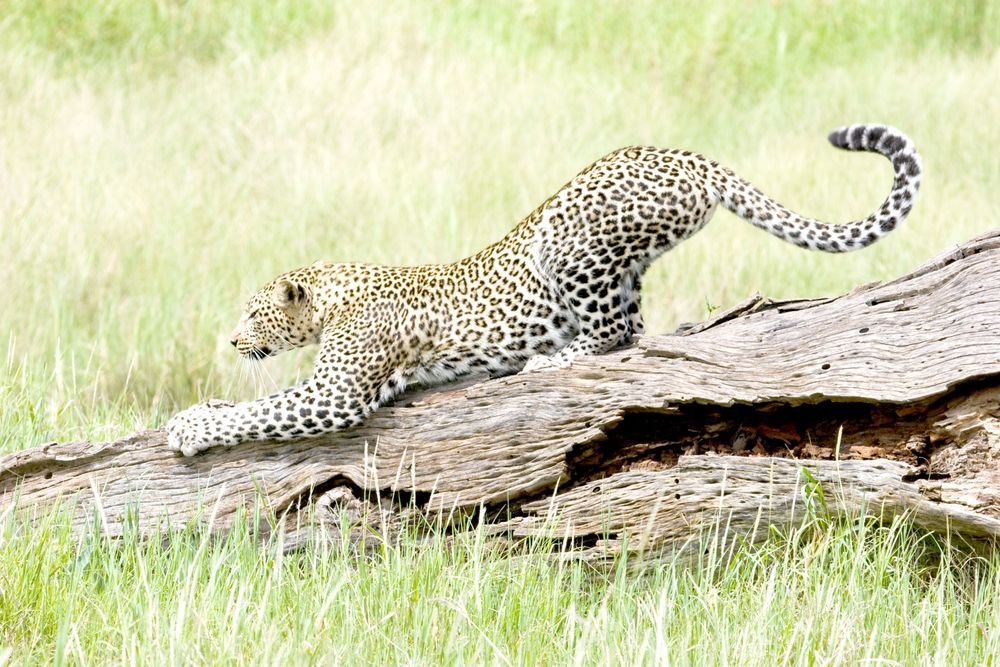
Leopards live across many Tanzanian habitats but reveal themselves selectively. Riverine woodland in central Serengeti is famous for daytime sightings, while Ruaha, Tarangire and Nyerere hold strong but more secretive populations.
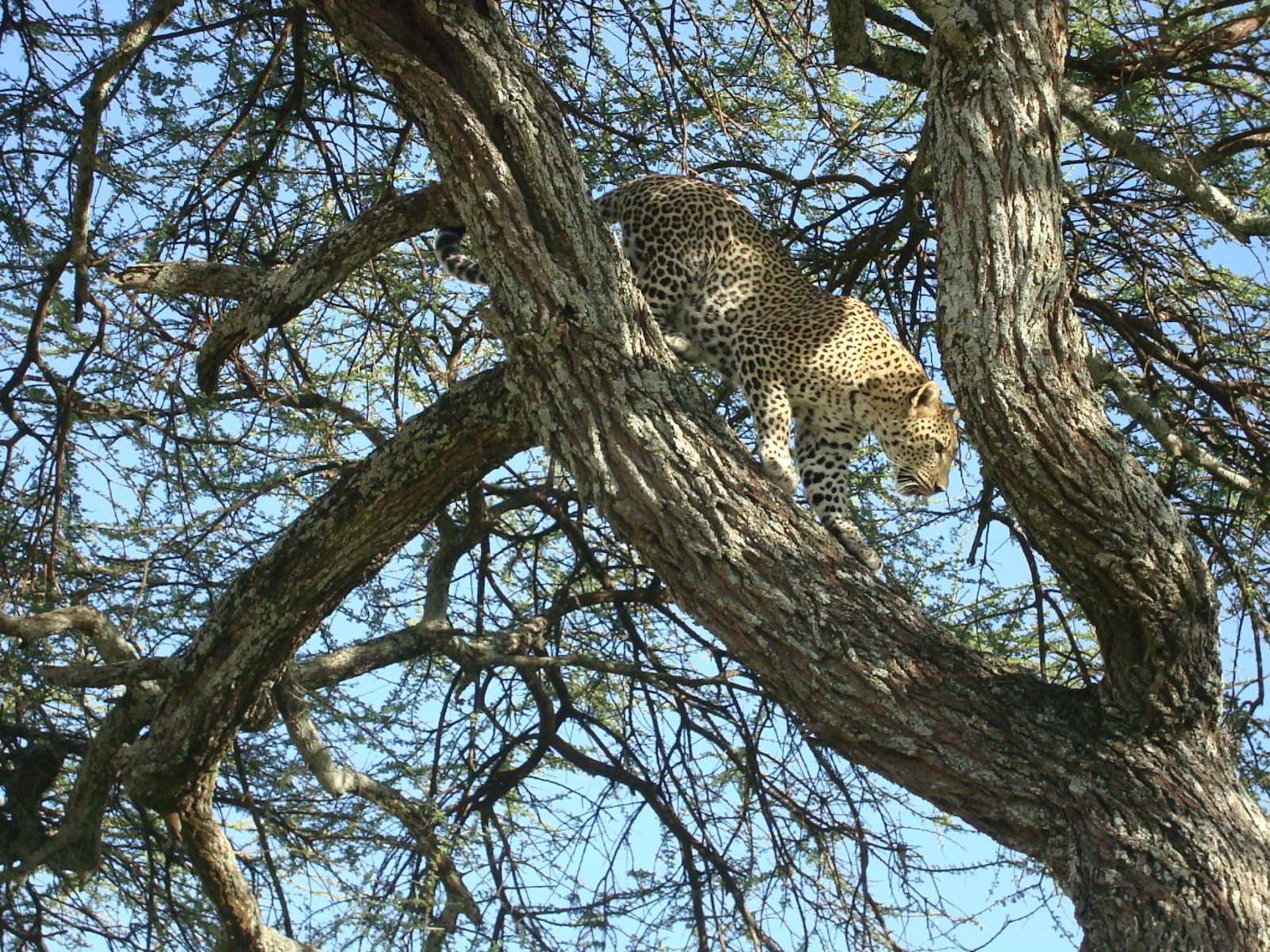
Their ability to climb and cache prey in trees helps protect a meal from lions, hyenas and other scavengers. Each rosette pattern is individual, allowing researchers and guides to recognise known cats.
Life in the wild
Behavior & relationships
Behavior
Solitary, territorial and mainly crepuscular or nocturnal. Rests in dense cover or trees and hunts by stealth at close range.
Social life
Adults usually meet to mate or at territorial boundaries. Mothers raise cubs alone and teach them to hunt over many months.
What makes it remarkable
Special features
Exceptional strength for its size, superb camouflage and the ability to haul surprisingly heavy prey into trees.