 Under Canvas: 6-Day Camping Safari with Two Serengeti Nights
$1,201per person
View safari
Under Canvas: 6-Day Camping Safari with Two Serengeti Nights
$1,201per person
View safari
Northern Circuit · Manyara Region
Lake Manyara National Park
About Lake Manyara National Park
Manyara is small — a narrow strip about fifty kilometres long, squeezed between the wall of the Great Rift Valley and the lake that fills two-thirds of the park — and it packs more distinct habitats into that strip than parks twenty times its size.
You enter through forest, which is not what anyone expects of a Rift Valley park. The escarpment behind catches water and pushes it out at the base as springs, and that permanent groundwater supports genuine tropical forest: fig, mahogany and tamarind, closed canopy, dark and loud with baboon troops among the largest in Africa. Two kilometres later it opens into acacia woodland, then floodplain, then the alkaline lake itself.
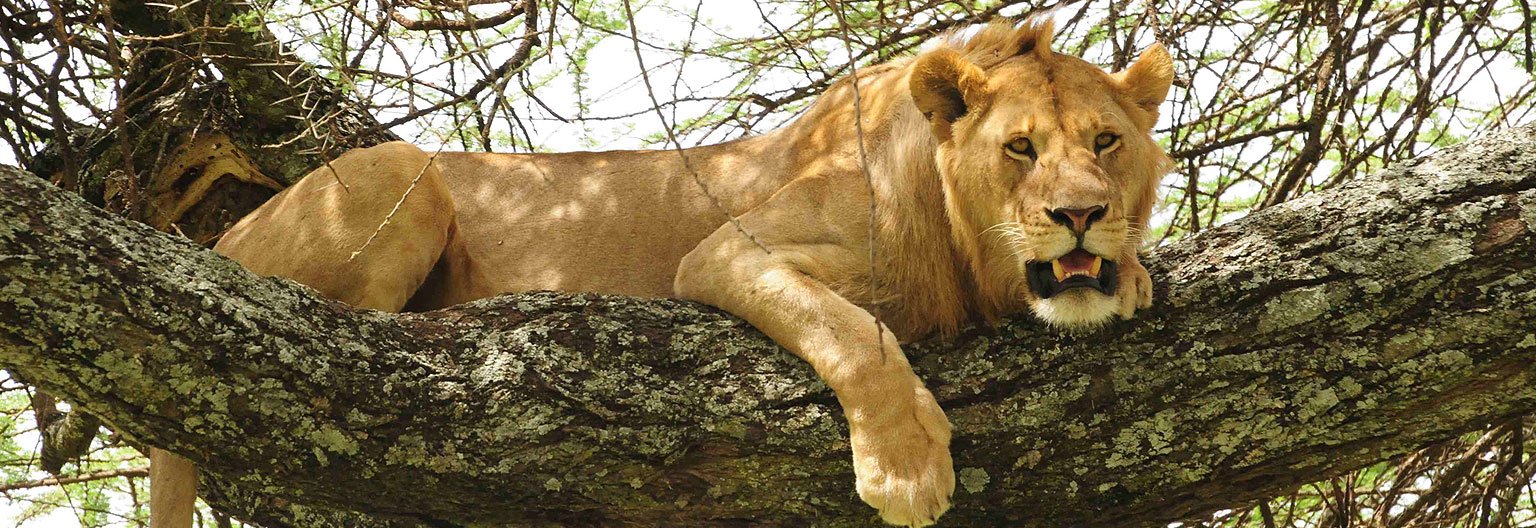
The park built its reputation on lions that lie in trees, and it remains one of only a few places in Africa where the behaviour is habitual. The honest position is that the lion population here is small and the park is narrow, so this is a sighting to hope for rather than expect — and any operator promising it is overselling. What raises the odds is a slow drive through the acacia in the middle of the day, when everyone else has gone to lunch.
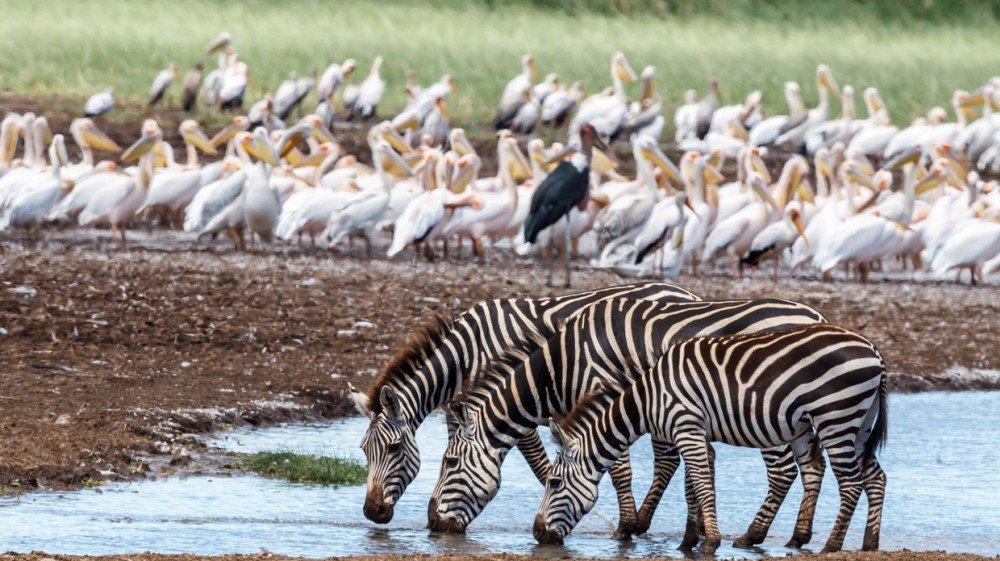
The lake is shallow, alkaline and rich in the algae flamingos filter-feed on, and when conditions are right they arrive in tens of thousands and the far shoreline turns pink. Conditions are not always right — the birds move between Manyara, Natron, Eyasi and the Kenyan lakes depending on water levels — but the shoreline is exceptional for birds regardless, and the park's list runs past 400 species.
Two things here are available almost nowhere else on the northern circuit. Manyara was the first Tanzanian national park to permit night drives inside the park boundary, which opens up the civet, genet, bushbaby and porcupine that a daytime safari never meets. And the treetop canopy walkway runs through the groundwater forest up to eighteen metres above the ground — the only one of its kind in northern Tanzania, and one of the few chances on a safari to be out of the vehicle and inside the habitat.
Manyara is usually given a half day between Arusha and the crater, and as a half day it works. Given a full day and a night, with the drive south to the Maji Moto hot springs and a night drive after dark, it becomes a destination rather than a stopover.
What to see here
12 places inside Lake Manyara National Park worth planning around.
-
The Tree-Climbing Lions #
Manyara built its reputation on lions that lie in trees, and it remains one of only a few places in Africa where the behaviour is habitual rather than occasional.
The usual sight is a lioness or two stretched along the horizontal limb of an acacia or a sausage tree in the middle of the day, legs hanging, entirely at ease at four or five metres. Why they do it here is still argued over — flies, heat, a view over long grass, or simply a learned habit passed down within these prides.
Honesty matters on this one. The lion population in Manyara is small and the park is narrow, so this is a sighting to hope for rather than expect, and any operator promising it is overselling. What raises the odds is a slow drive through the acacia woodland in the middle of the day, when everyone else has gone to lunch, with a guide who knows which trees these prides favour.
-
The Groundwater Forest #
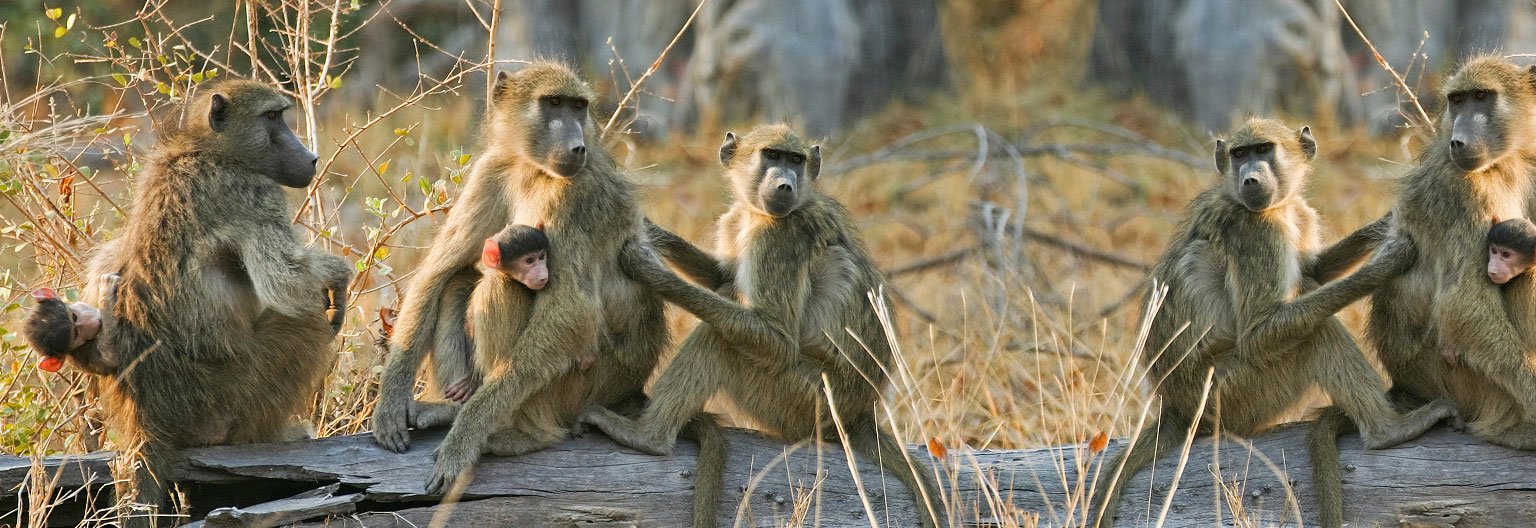
You enter Manyara through forest, which is not what most people expect a Rift Valley park to look like. The escarpment behind it catches water and pushes it out at the base as springs, and that permanent groundwater supports genuine tropical forest — fig, mahogany, tamarind and croton, closed canopy, dark and loud.
The forest holds huge troops of olive baboon, some of the largest in Africa and the subject of decades of behavioural research, along with blue monkey, silvery-cheeked hornbill and turaco. Elephant move through it, and meeting one in dense forest at close quarters is a very different experience from watching one across open plain.
It lasts only a couple of kilometres before the park opens out, which is part of what makes Manyara interesting: you pass through four distinct habitats in a park you can drive across in an afternoon.
-
The Flamingo Flats #
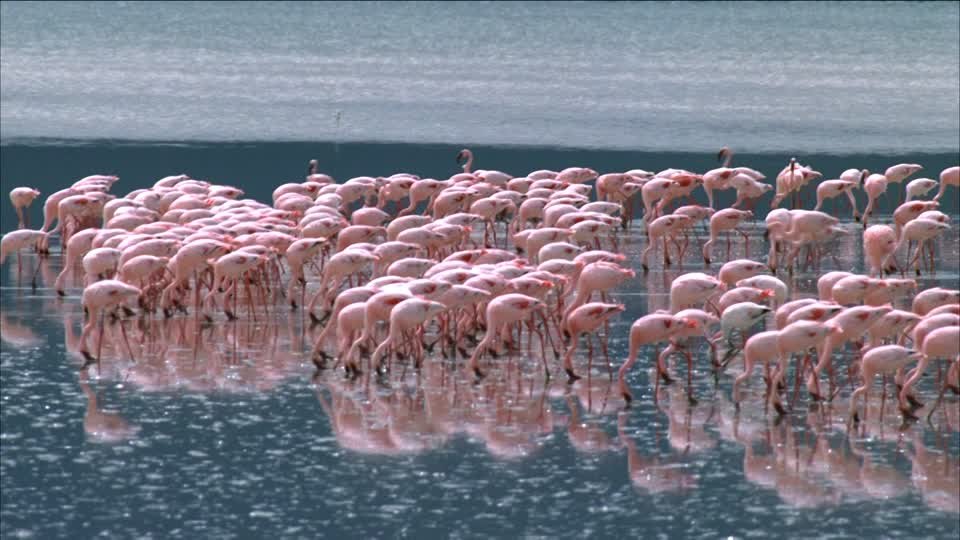
The lake fills about two-thirds of the park and is alkaline, shallow and rich in the blue-green algae that flamingos filter-feed on. When conditions are right they arrive in tens of thousands and the far shoreline turns pink.
"When conditions are right" is doing real work in that sentence. Manyara is a shallow soda lake whose level swings dramatically between seasons and between years; the birds move between Manyara, Natron, Eyasi and the Kenyan lakes depending on where the water and the algae are. Some months the flats are spectacular, some months the birds have gone elsewhere.
Even without them the shoreline is exceptional for birds — pelican, storks, spoonbill, and enormous mixed flocks of waders — and the open flats hold buffalo, wildebeest and zebra grazing right down to the waterline with the escarpment rising behind.
-
Pictures coming soon We are still building this gallery.
The Treetop Canopy Walkway #
A suspended walkway running through the groundwater forest at up to eighteen metres above the ground, on a series of bridges strung between platforms in the big trees. It is the only canopy walkway of its kind in northern Tanzania.
What it offers is a genuinely different vantage. Almost everything else on a safari is seen from a vehicle at ground level; here you are in the canopy layer, level with the birds and the monkeys, looking down through the structure of the forest rather than up at it.
The walk takes about an hour with a guide, is done in a harness, and is straightforward enough for children and for anyone reasonably steady on their feet — it is a walkway, not a climb. It costs extra on top of the park fee, and it is one of the few genuinely active things available in a national park where you otherwise cannot leave the car.
-
Pictures coming soon We are still building this gallery.
The Rift Valley Escarpment #
The wall of the Great Rift Valley rises around six hundred metres directly behind the park, and it is the reason everything in Manyara is arranged the way it is: it makes the springs that feed the forest, it holds the rain, and it confines the park to a narrow strip between cliff and lake.
The view from the top, on the road up towards Karatu and Ngorongoro, is one of the great roadside views in East Africa — the lake laid out below, the forest as a dark green band along its edge, and the valley floor running away to the horizon. Most itineraries stop at the viewpoint without being asked.
Inside the park the escarpment provides the backdrop to almost every photograph, and the thermals coming off it are why Manyara is good for raptors: bateleur, augur buzzard and both eagle species work the updraughts along the cliff face.
-
Pictures coming soon We are still building this gallery.
The Hippo Pool #
Where the Simba River spreads out before reaching the lake, there is a permanent pool that holds a resident hippo population, and it is one of the few places in the park where visitors are allowed out of the vehicle at a marked viewpoint.
Hippo are far more interesting close up and over time than they are as grey humps in the distance. At the pool you can watch the social structure of a pod work itself out — the yawning that is a threat rather than a yawn, the calves riding on their mothers' backs, the constant low arguments — and it is worth twenty minutes rather than a passing photograph.
The surrounding marsh draws waterbirds in numbers, including large flocks of egret and openbill stork, and buffalo come down to drink in the late afternoon. It is the best single stop in the northern half of the park.
-
Pictures coming soon We are still building this gallery.
Maji Moto Hot Springs #
At the southern end of the park, where few vehicles get to, hot springs come up through the ground at the base of the escarpment and run into the lake. Maji moto is simply Swahili for hot water, and it is hot enough in places to be uncomfortable to touch.
The springs are geothermal, driven by the same Rift Valley faulting that made the escarpment, and the mineral deposits around them stain the ground in colours that look out of place in a game park. Little grows immediately around the outflow, so the setting is stark against the woodland behind.
Getting there means driving the length of the park and back, which takes the better part of a day and is the reason most visitors — who give Manyara a half day between Arusha and the crater — never see it. For anyone staying nearby with a full day to spend, it is the quietest part of the park.
-
Pictures coming soon We are still building this gallery.
Night Game Drives #
Manyara was the first national park in Tanzania to permit night drives inside the park boundary, and it remains one of very few where this is possible without going onto a private concession.
A drive leaves after the ordinary park closing time with a guide and a spotlight, and it finds the animals that the daytime park never shows: civet, genet, white-tailed mongoose, porcupine, bushbaby swinging through the acacia, and the nocturnal birds — nightjars sitting on the warm track, and owls hunting along the forest edge. Leopard and hyena are both possible and both behave completely differently after dark.
Drives run about two hours and need to be booked in advance through the park, usually via your camp. For a park that is often treated as a half-day filler, it is the thing that justifies giving Manyara a night of its own.
-
Pictures coming soon We are still building this gallery.
The Baboon Troops #
Manyara is thought to hold one of the densest olive baboon populations in Africa, and the troops here are large enough that meeting one on the forest road can take ten minutes to pass.
They are worth more than the glance most people give them. A troop of a hundred and fifty animals is a visible political structure: males posturing at the edges, females ranked and grooming in their own alliances, juveniles testing everything, infants riding jockey-style on their mothers. Because these baboons are relaxed about vehicles and the forest road is narrow, all of it happens close enough to follow without binoculars.
It is also the reason Manyara has been used for primate research for decades. If you have half an hour and no lion to chase, parking beside a troop and simply watching is the most rewarding thing to do in the north of the park, and the guides who enjoy it will name the individuals for you.
-
Pictures coming soon We are still building this gallery.
Manyara's Elephants #
This is where the modern study of elephants began. Iain Douglas-Hamilton worked here from the mid-1960s, learning to recognise individuals by their ears and tusks and following families through the years, and the book that came out of it changed how the animal was understood and, eventually, how it was protected.
The population went through very hard decades after that, and it is smaller now than it was then. What has not changed is the setting: Manyara's elephants live in dense groundwater forest rather than on an open plain, so encounters are close, sudden and at eye level, with the animals moving between trees a few metres from the vehicle.
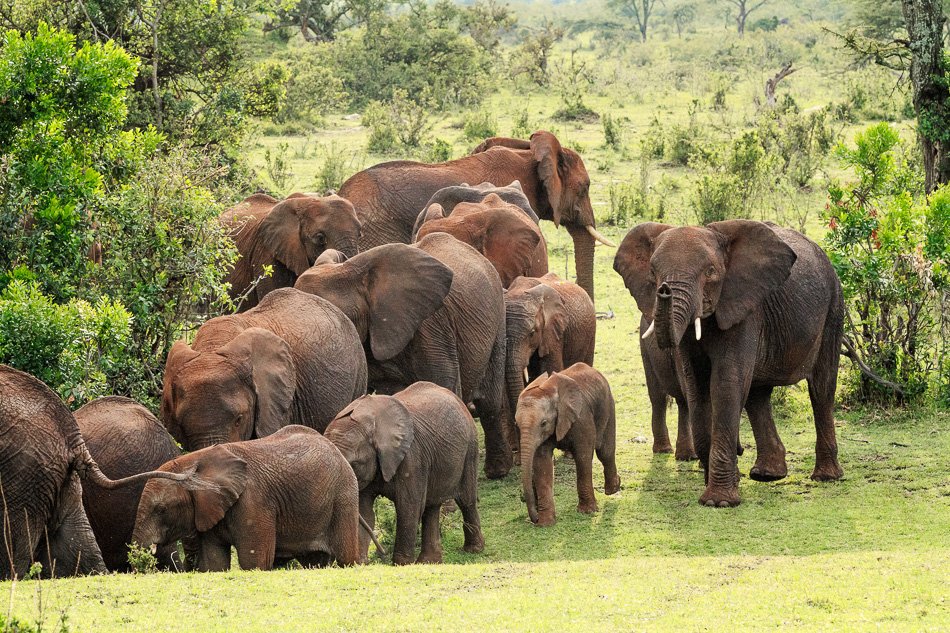
They are also famously relaxed here, the result of generations that have never been hunted in the park. Give them room and switch off, and a family will feed past the vehicle as though it were a rock. It is the best place on the northern circuit to be near elephants rather than to look at them.
-
Pictures coming soon We are still building this gallery.
Mto wa Mbu Village #
The village at the park gate is a destination in its own right, and one of the very few places in Tanzania where a cultural visit is genuinely well organised. Mto wa Mbu grew up around irrigation water off the escarpment and drew people from all over the country, so a place of a few thousand households claims speakers of a very large number of Tanzanian languages.
The standard half-day is a walk or a bicycle ride through the irrigation furrows and the smallholdings: banana varieties you did not know existed, rice paddies, papyrus, a Chagga banana-beer maker, a Makonde carving workshop, a local market, and lunch cooked in somebody's house. It is run by a village co-operative and the money is visible in what it has built.
It fills the afternoon of a Manyara day perfectly, since the park itself is small enough to see in a morning, and it does something a game drive cannot: it puts the people who live between these parks into the trip rather than leaving them as scenery on the drive through.
-
Pictures coming soon We are still building this gallery.
Endabash and the Southern Sector #
South of the Msasa River the park narrows to a strip between the escarpment and the lake, and the track running down it to Endabash and the Maji Moto end sees a small fraction of the traffic the northern forest does.
The country changes as you go. The groundwater forest gives way to open acacia woodland and then to scrub against the cliffs, and this is where the park's lions spend much of their time, along with the elephant families that move out of the north when the vehicles arrive. The Endabash River cuts a small gorge coming off the escarpment, and the pools in it hold game late in the dry season.
Getting down here and back is most of a day, which is precisely why so few do it. For anyone who has driven the northern loop before and found it crowded, the southern sector is the same park with the volume turned down, and it is the part the lodges on the escarpment look out over.
Safaris that visit Lake Manyara National Park
Ready-made itineraries that include this destination. Every one can be tailored.
Under Canvas: 6-Day Camping Safari with Two Serengeti Nights
$1,201per person
View safari
 The Island Escape: 5-Day Shared Budget Safari from Zanzibar
$1,240per person
View safari
The Island Escape: 5-Day Shared Budget Safari from Zanzibar
$1,240per person
View safari
 The Grand Descent: 6-Day Luxury Fly-In Safari
$4,389per person
View safari
The Grand Descent: 6-Day Luxury Fly-In Safari
$4,389per person
View safari
 11-Day Serengeti Horizons & Zanzibar Private Safari Escape
$3,005per person
View safari
12-Day Tanzania Grand Safari & Zanzibar Luxury Beach Escape
$4,576per person
View safari
11-Day Serengeti & Zanzibar Private Safari Escape
$3,608per person
View safari
11-Day Serengeti Horizons & Zanzibar Private Safari Escape
$3,005per person
View safari
12-Day Tanzania Grand Safari & Zanzibar Luxury Beach Escape
$4,576per person
View safari
11-Day Serengeti & Zanzibar Private Safari Escape
$3,608per person
View safari