 6-Day Kilimanjaro Marangu Route Private Summit Trek
$1,335per person
View safari
6-Day Kilimanjaro Marangu Route Private Summit Trek
$1,335per person
View safari
Kilimanjaro Region · near Moshi
Mount Kilimanjaro
About Mount Kilimanjaro
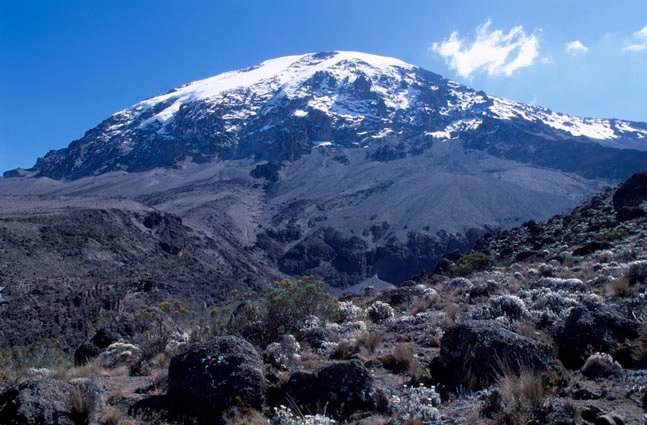
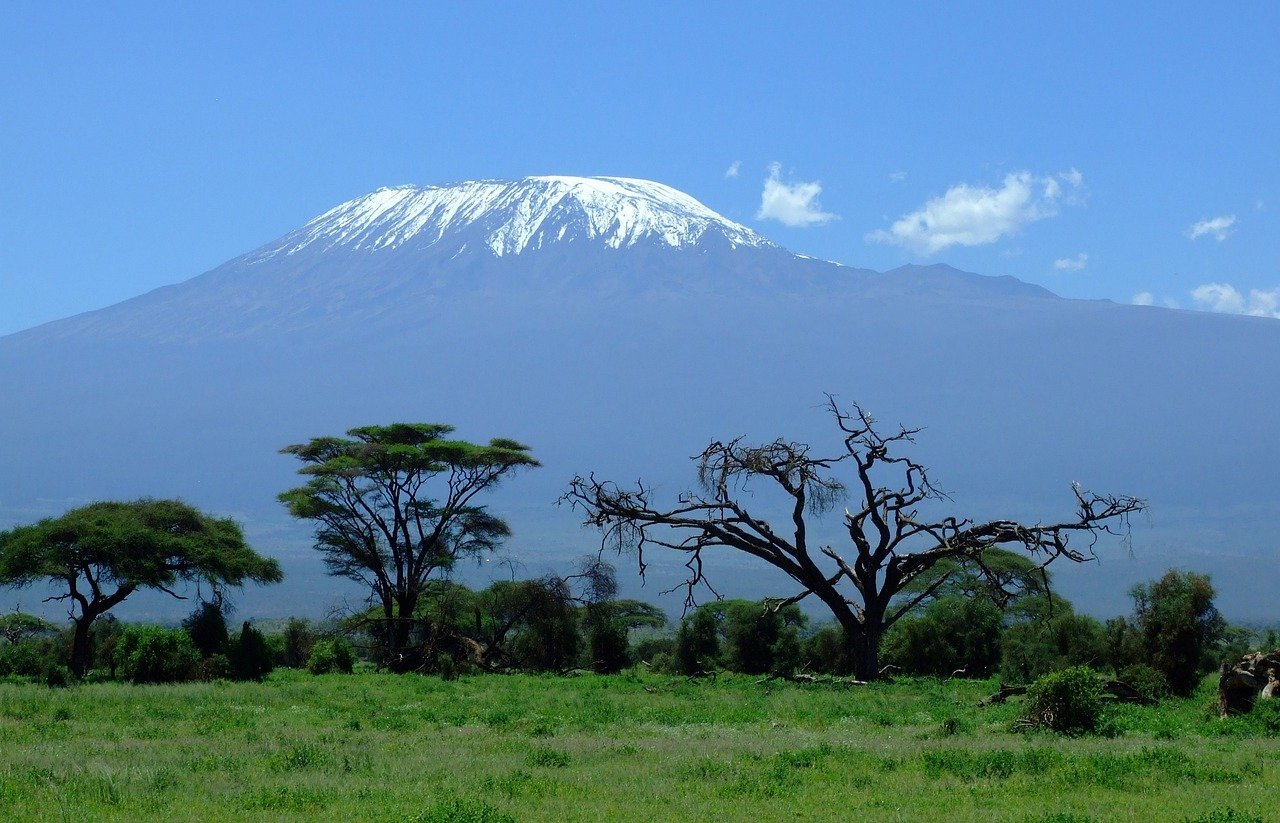
Kilimanjaro is the highest mountain in Africa at 5,895 metres and the highest freestanding mountain in the world — freestanding because it is not part of a range but a single volcano rising straight off the plain, which is exactly why it looks the way it does from a hundred kilometres away.
No technical climbing is involved anywhere on it. It is a long walk at altitude, and altitude is what decides the outcome. Fitness helps; acclimatisation decides. That single fact should govern how a climb is planned, and it is why the number of nights on the mountain and the shape of the route matter far more than how strong you are when you arrive.
The climb passes through five climate zones in under a week: cultivated foothills, then closed tropical rainforest, then heath and moorland with giant groundsel and lobelia found only on East Africa's high mountains, then alpine desert of volcanic rubble where almost nothing grows, and finally the arctic summit with its glaciers. Walking from equatorial jungle to permanent ice in six days is the thing about Kilimanjaro that no photograph conveys.
Seven routes reach the summit and they are not equivalent. Machame from the south and Lemosho from the west both climb high and sleep low, which is the profile that gets people to the top, and between them they account for most of our climbs. Lemosho adds the Shira Plateau and the quietest first days on the mountain. Rongai approaches from the drier north and is the sensible choice in marginal seasons. Marangu is the oldest route and the only one with huts — it is also the one most often oversold as easy, and its five-day version has among the lowest success rates on the mountain, which is why we do not offer it.
Summit night starts around midnight from high camp. Six or seven hours in the dark and the cold brings you to Stella Point on the crater rim, and a further forty-five minutes along the rim to Uhuru Peak, usually arriving as the sun comes up behind Mawenzi. Coming down takes two days.
The honest advice on cost is to spend it on days rather than comfort. Adding a single night to any route raises the odds of standing on the summit substantially, and it is the cheapest insurance available on a climb. Every climb we run uses properly paid and equipped crews under KPAP-aligned porter welfare standards, which is not the industry norm and is worth asking any operator about before you book.
What to see here
12 places inside Mount Kilimanjaro worth planning around.
-
Uhuru Peak #
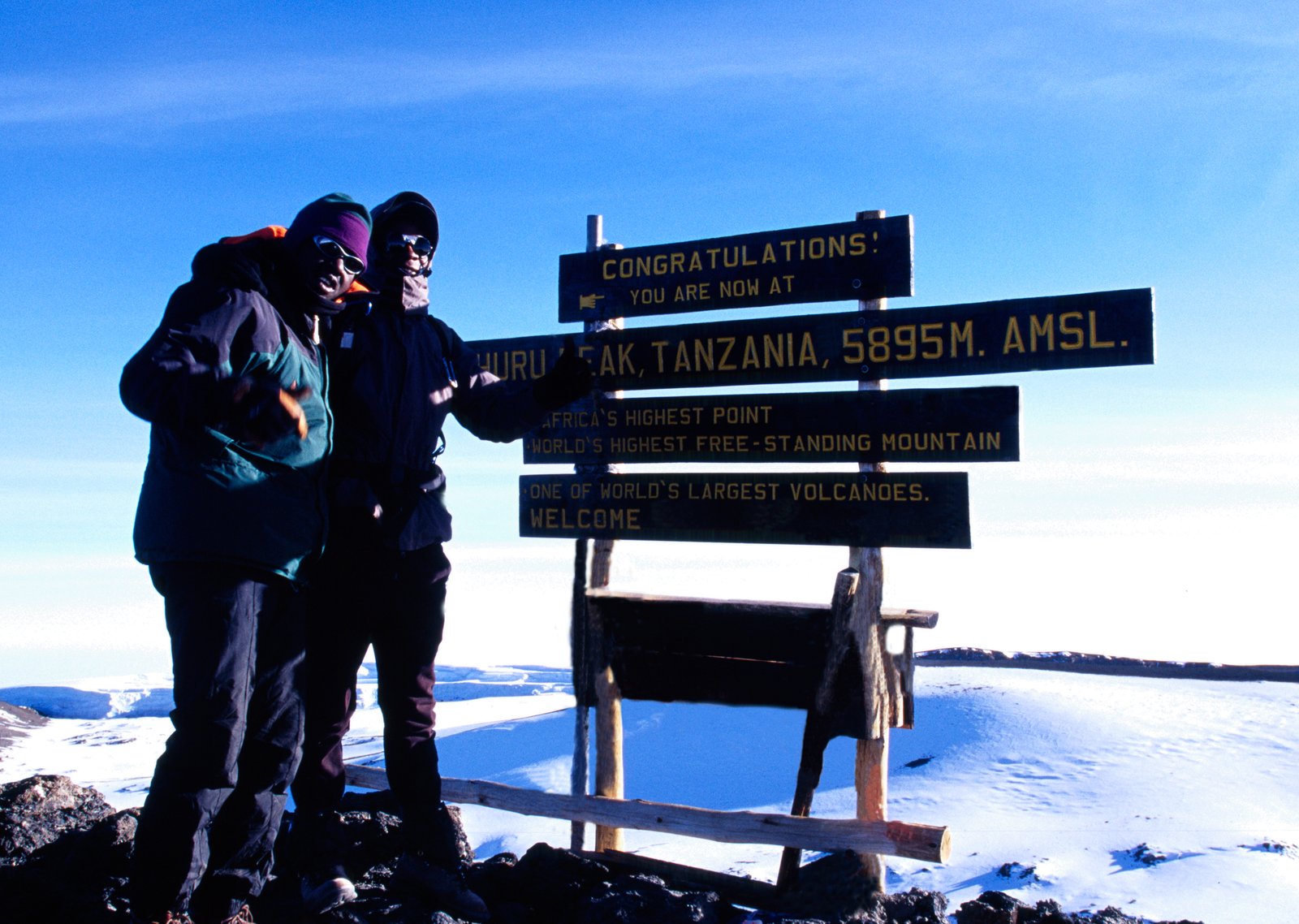
At 5,895 metres, the highest point in Africa and the highest freestanding mountain in the world — freestanding because Kilimanjaro is not part of a range but a single volcano rising straight off the plain, which is why it looks the way it does from a hundred kilometres away.
The summit is reached in the dark. Climbers leave high camp around midnight and walk six or seven hours to stand on the crater rim at Stella Point, then a further forty-five minutes along the rim to Uhuru itself, usually arriving as the sun comes up over Mawenzi. The cold at that hour is serious and the air holds roughly half the oxygen of sea level.
No technical climbing is involved anywhere on the mountain — it is a long walk at altitude, and altitude is what decides it. Fitness helps; acclimatisation decides. That is why route choice and the number of nights matter far more than how strong you are.
-
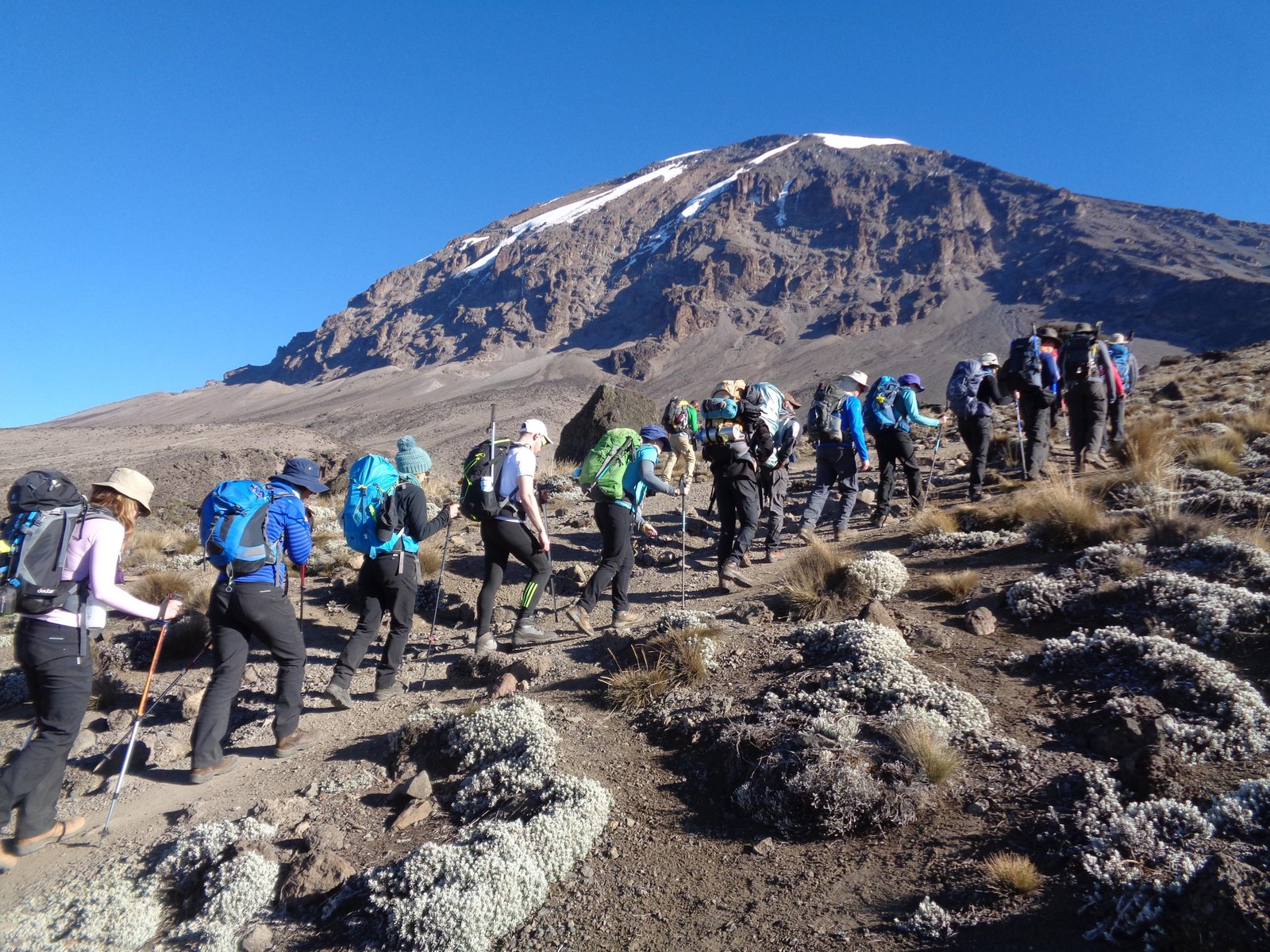
The Machame and Lemosho Routes #
The two routes we recommend most often, for the same reason: both climb high and sleep low, which is how you acclimatise.
Machame approaches from the south, takes six or seven days, and is the busier of the two — it is popular because it works, and because the scenery changes completely every day. Lemosho starts further west, adds a day or two crossing the Shira Plateau before joining the Machame line, and gives you the best acclimatisation profile on the mountain along with the quietest first two days.
Success rates track nights on the mountain more closely than anything else. Adding a single day to either route raises the odds of standing on the summit substantially, and it is the cheapest insurance available on a climb. If the budget stretches to one more night, spend it here rather than on a better hotel at the end.
-
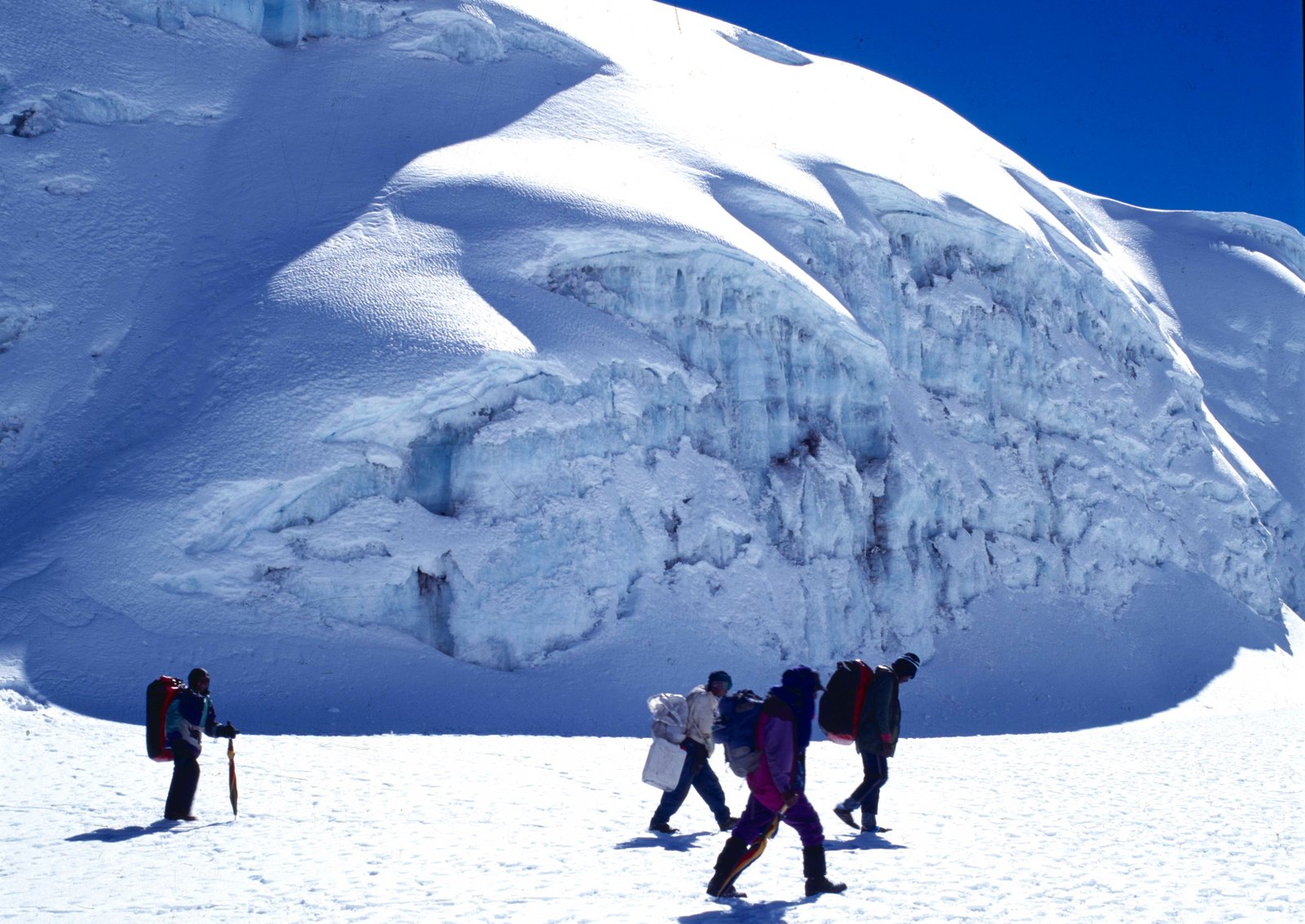
The Shira Plateau #
A high, open moorland at around 3,800 metres, and the collapsed remains of the oldest of Kilimanjaro's three volcanic cones — Shira blew itself out and filled in long before Kibo, the peak you are climbing, was formed.
Walking across it is unlike the rest of the mountain. The ground is level for once, the sky is enormous, and Kibo stands ahead of you all day with the glaciers visible on its southern face. Giant groundsel and lobelia grow here in shapes that belong to no other landscape, plants found only on the high mountains of East Africa.
For climbers on Lemosho, the plateau is where the altitude starts to be felt, and where a slow pace stops being advice and becomes necessary. It is also the best stargazing on the route, with no light within fifty kilometres and thin, dry air overhead.
-
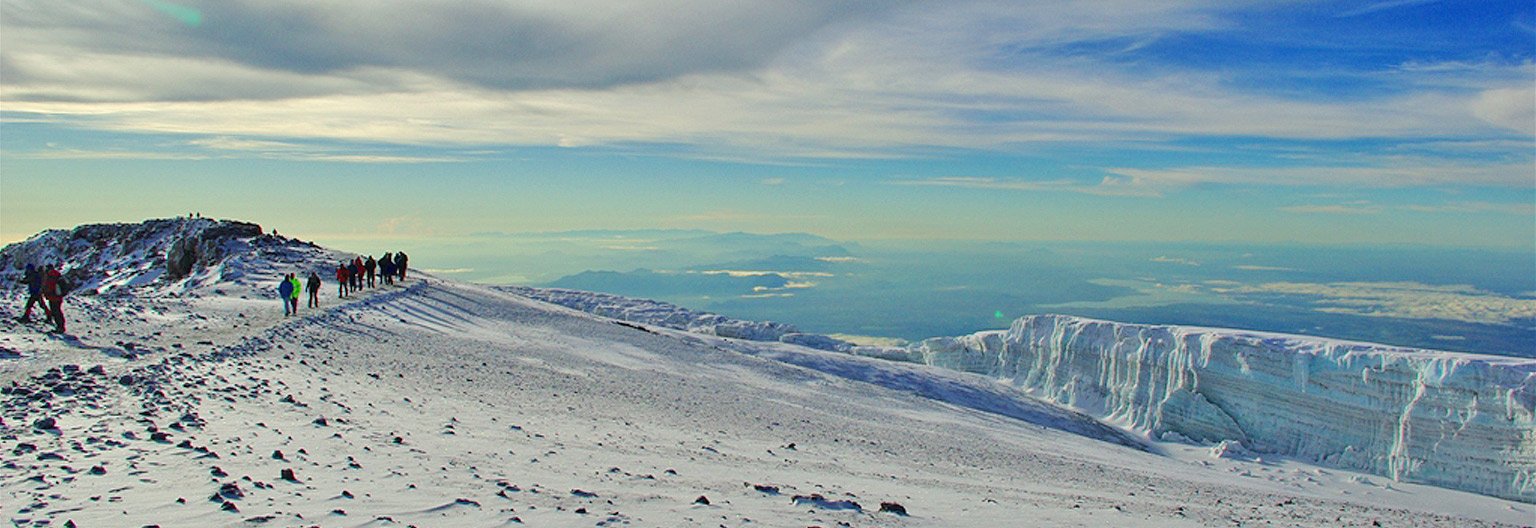
The Barranco Wall #
A 250-metre rock face that the southern routes climb directly, and the part of the mountain that worries people most before they see it and least afterwards. It is a scramble rather than a climb: hands are used for balance, no ropes or equipment are involved, and porters go up it carrying loads.
The wall takes about an hour and a half. The famous point is the Kissing Rock, where the path narrows and you press against the stone to get around it with a considerable drop below. Everyone photographs it; nobody falls off it.
What matters about the Barranco is what it does for your body rather than your nerves. The wall takes you up several hundred metres and then the trail drops again into the Karanga Valley — climb high, sleep low, exactly the profile that gets people to the summit. It is one of the best acclimatisation days on the mountain disguised as the scariest.
-
Pictures coming soon We are still building this gallery.
The Rainforest Zone #
Every route begins in forest, and the first day is spent walking through it: closed canopy, moss hanging from the branches, tree ferns, and the constant sound of water. Kilimanjaro makes its own weather, and the southern slopes catch enough rain to hold genuine tropical montane forest at the base of a mountain with glaciers on top.
This is the wettest part of the climb and rain here is normal at any time of year. It is also the most alive: blue monkey and colobus in the canopy, turaco calling, and on the quieter routes elephant and buffalo sign on the trail, though the animals themselves are rarely seen.
The forest is the first of five climate zones the climb passes through — forest, heath, moorland, alpine desert and arctic summit. Walking from equatorial jungle to permanent ice in under a week is the thing about Kilimanjaro that no photograph conveys.
-
Pictures coming soon We are still building this gallery.
The Marangu and Rongai Routes #
Marangu is the oldest route and the only one with permanent huts rather than tents — bunk accommodation, dining halls and a roof over your head, which is why it is sometimes called the Coca-Cola route. It approaches from the south-east and is often sold as the easy option.
It is not. Marangu goes up and comes down the same way, gaining height steadily with little of the climb-high-sleep-low profile that acclimatisation depends on, and its summit success rate is among the lowest on the mountain — particularly on the five-day version, which we do not recommend to anyone.
Rongai is the answer for some climbers: the only route approaching from the north, on the drier Kenyan side, quieter than the southern routes and a genuinely good choice in the wet season when the southern slopes are running with water. It joins the crater rim from the opposite side and descends by Marangu.
-
Pictures coming soon We are still building this gallery.
Lava Tower and the Alpine Desert #
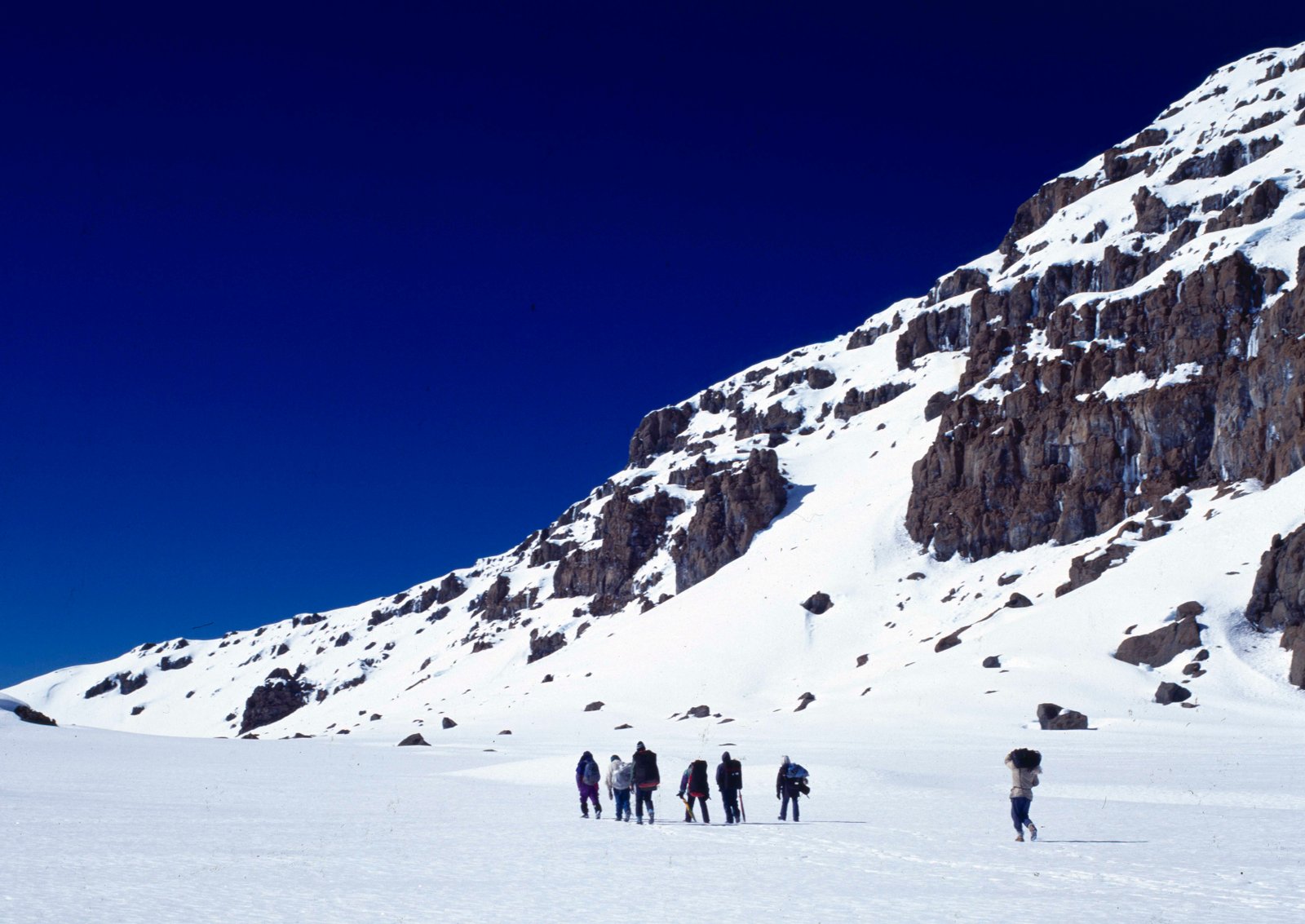
At around 4,600 metres the vegetation stops. What follows is alpine desert: volcanic rubble, dust, no shelter, enormous daily temperature swings and light that comes at you off the ground as well as from the sky.
Lava Tower is a 300-foot plug of solidified magma standing in the middle of it, and most southern routes stop there for lunch before descending to Barranco camp several hundred metres lower. Some climbers feel altitude here for the first time — a headache at Lava Tower is common and usually passes on the descent, which is precisely why the day is built this way.
The walk through the alpine desert is where Kilimanjaro stops feeling like a hike and starts feeling like a mountain. Little grows, nothing moves, and the summit is directly overhead for the first time since the forest.
-
Pictures coming soon We are still building this gallery.
The Summit Glaciers #
The ice on top of Kilimanjaro is the reason the mountain looks the way it does from the plains, and the reason a European who reported snow on the equator in 1848 was disbelieved for years.
What remains are the Northern Icefields and the Furtwängler Glacier on the crater floor — walls of ice standing twenty metres high, layered and blue where the sun cuts into them, sitting three degrees south of the equator. Walking past them in the first light after a summit night is the strangest half-hour on the mountain.
They are also going. The ice has retreated dramatically over the past century and continues to, and the honest thing to say is that people climbing Kilimanjaro in fifty years may not see glaciers at all. Climbers who want time among them should consider a crater camp, which allows a night at almost 5,700 metres beside the ice rather than an hour.
-
Pictures coming soon We are still building this gallery.
The Northern Circuit Route #
The longest route on the mountain and, by a clear margin, the one with the highest success rate. It follows Lemosho onto the Shira Plateau, then instead of turning south with everyone else it swings right around the quiet northern slopes and comes at the summit from the far side.
What it buys is time. Nine days on the mountain rather than six or seven means extra nights above 3,500 metres spent walking high and sleeping low, which is exactly what acclimatisation asks for. Operators report summit success in the region of ninety per cent on this route against roughly sixty on a short Marangu, and that gap is almost entirely acclimatisation rather than fitness.
The northern traverse itself is empty. You will see very few other groups for two or three days, and it looks out over the plains towards Kenya rather than back down onto Moshi. It costs more, because every extra day carries a crew, and it is the route to choose for anyone who has one attempt at this mountain and wants the best odds on offer.
-
Pictures coming soon We are still building this gallery.
Mawenzi and the Saddle #
Kilimanjaro is three volcanoes, and Mawenzi is the ruined one: a jagged 5,149-metre tower of eroded rock on the eastern side, higher than anything in the Alps and nothing like the smooth dome of Kibo. Technical climbing on it is closed to trekkers, but walking beneath it is not.
The Rongai and Northern Circuit routes cross the Saddle, the high desert between the two peaks. It is a wide, stony, almost lifeless plain at around 4,300 metres with Kibo ahead and Mawenzi behind, the most other-worldly ground on the mountain and the stretch people most often describe afterwards, partly because it is where the altitude begins to be felt properly.
Mawenzi Tarn, a small lake in a cirque under the north-western face, is one of the finest camps on the mountain and an acclimatisation day well spent. Walking up towards the ridge in the afternoon and coming back down to sleep is textbook preparation for summit night, and the face above the camp turns red at sunset.
-
Pictures coming soon We are still building this gallery.
Crater Camp and the Ash Pit #
A small number of itineraries add a night inside the summit caldera at around 5,700 metres, camped on the ash between the Furtwangler Glacier and the inner Reusch Crater. It is the highest campsite in Africa and there is nothing else like it anywhere on the continent.
From the camp you can walk to the rim of the ash pit, a near-perfect volcanic cone several hundred metres across, with sulphur staining the walls and the mountain still venting into the cold. Standing beside the ice walls of the Furtwangler at first light, with no one else up there, is what the extra day is for.
It has to be taken seriously. Sleeping at 5,700 metres is far harder on the body than passing through, altitude illness develops faster and evacuation is slow, so it suits only well-acclimatised climbers on a long route with an operator equipped for it. Permissions and conditions change from season to season, so it is arranged in advance rather than decided on the mountain.
-
Pictures coming soon We are still building this gallery.
Chagga Villages and the Waterfalls #
Not everyone in a party is climbing, and the days before and after a trek have to go somewhere. The southern slopes above Moshi are farmed by the Chagga, whose irrigation furrows, banana and coffee gardens and hidden caves are the reason this side of the mountain looks the way it does.
The usual half-days are Materuni, where a walk through the coffee farms ends at a waterfall dropping into a forested gorge, and Kilasiya near Uru, which is shorter and steeper. Both are run by village co-operatives, both finish with green coffee roasted, pounded and drunk on the spot, and both cost very little. Marangu adds the Chagga caves, dug as refuges during the wars of the nineteenth century.
For climbers this is the best possible gentle walk on an arrival day, and for anyone not going up it is the part of Kilimanjaro they actually get to see. The money stays in the villages, which is not true of much of what happens on the mountain above them.
Safaris that visit Mount Kilimanjaro
Ready-made itineraries that include this destination. Every one can be tailored.
6-Day Kilimanjaro Marangu Route Private Summit Trek
$1,335per person
View safari
 10-Day Tanzania Rift Valley, Serengeti & Cultural Highlands Private Safari
$3,575per person
View safari
10-Day Tanzania Rift Valley, Serengeti & Cultural Highlands Private Safari
$3,575per person
View safari
 7-Day Kilimanjaro Lemosho Route Private Summit Trek
$2,497per person
View safari
7-Day Kilimanjaro Lemosho Route Private Summit Trek
$2,497per person
View safari
 6-Day Kilimanjaro Machame Route Private Summit Trek
$1,530per person
View safari
6-Day Kilimanjaro Machame Route Private Summit Trek
$1,530per person
View safari