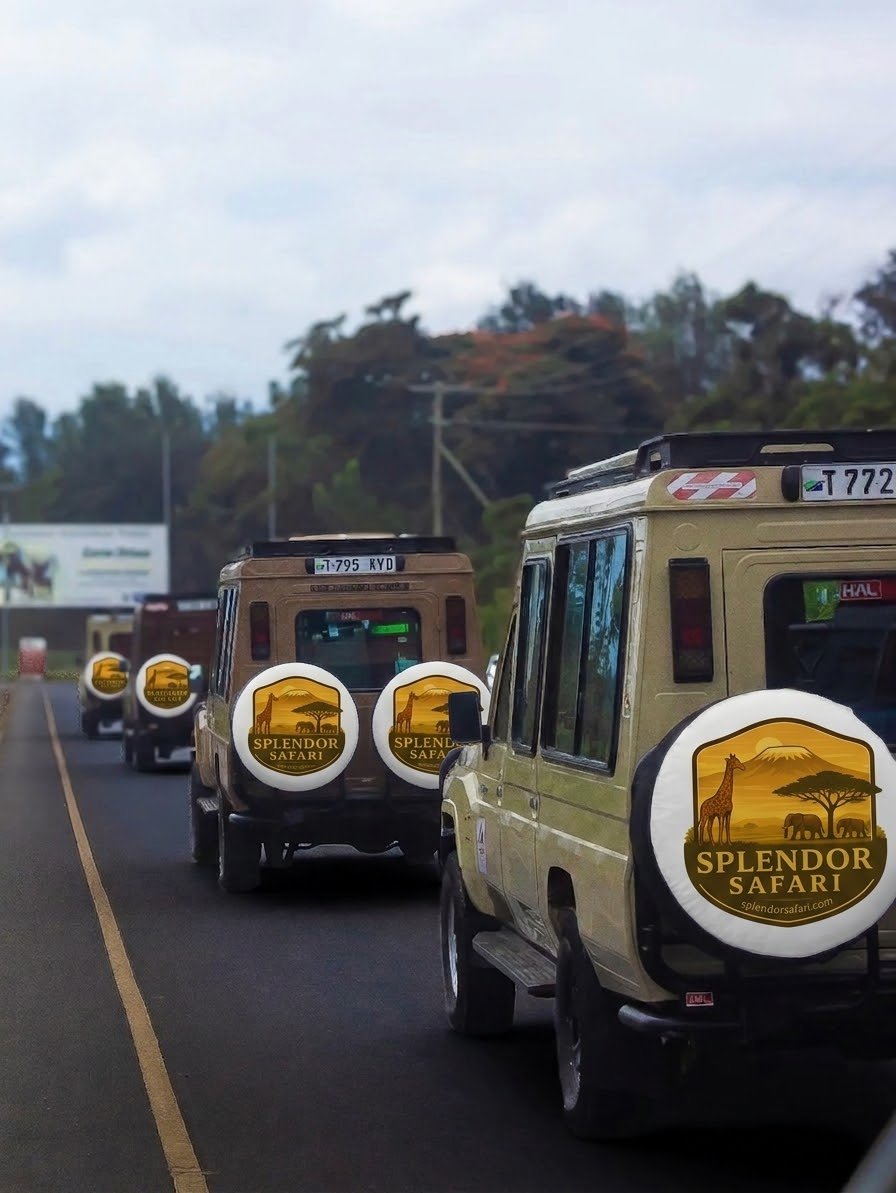
Every safari we run uses an extended Toyota Land Cruiser — the vehicle the whole industry settles on, because it is the only thing that reliably handles black cotton mud in the wet and corrugation in the dry.
Each one has a pop-up roof you stand up through for a clear 360-degree view and unobstructed photography, large sliding windows on both sides, individual bucket seats rather than benches, 12V and USB charging sockets, a cool box with drinking water, binoculars, reference books and a two-way radio the guides use to share sightings between vehicles.
We seat a maximum of six guests in a car built for seven or eight. That leaves an empty seat as gear space and guarantees that nobody is stuck in the middle. Vehicles are serviced between every safari and carry two spare wheels, a jack, a tow rope and a first aid kit.