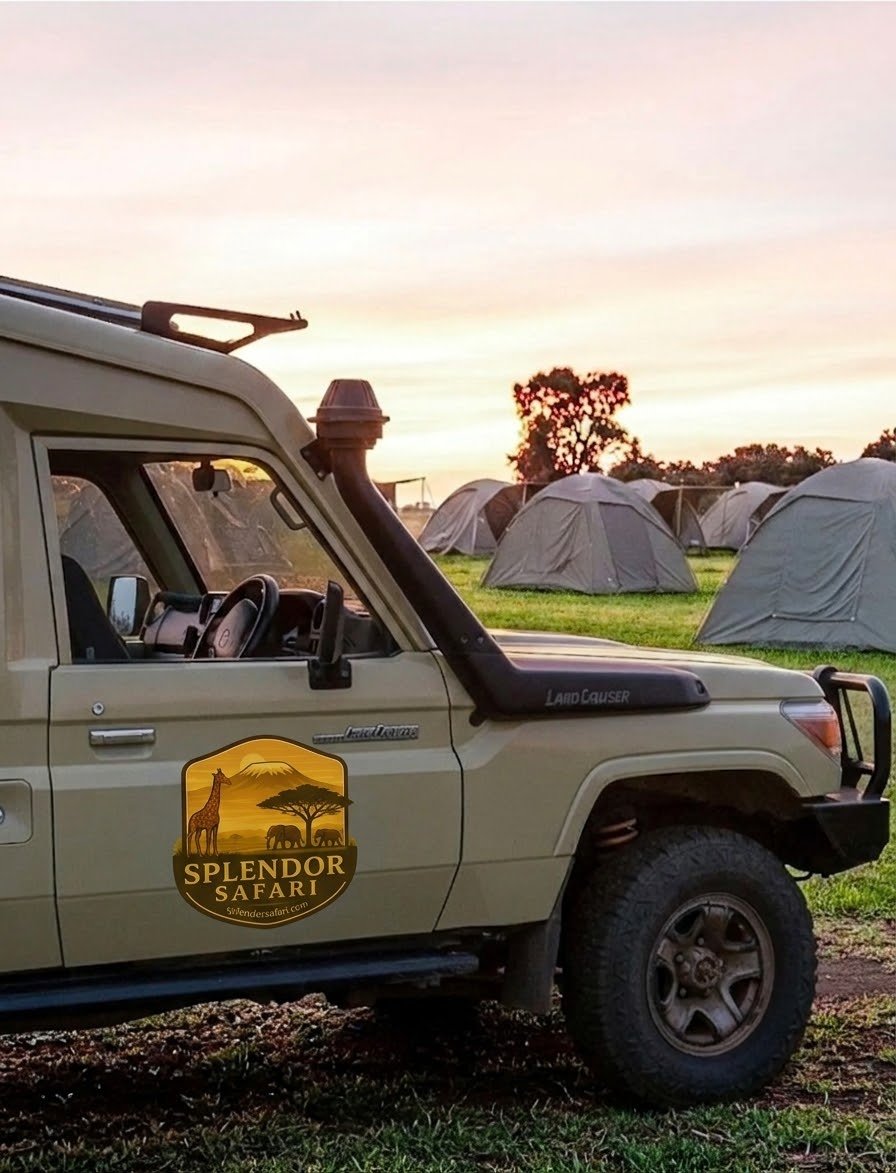
On a camping safari you sleep in a walk-in dome tent with a mattress and a sleeping bag, pitched at a designated campsite inside or beside the park. A camp crew travels with you: they pitch and strike the tents, and a cook prepares three hot meals a day over gas and fire, which are considerably better than anyone expects.
Public campsites have shared washing blocks with cold or solar-warmed showers and flushing toilets. Special campsites, which cost more and hold only your group, have far more basic facilities but drop you alone in the middle of the wilderness with no other camp in sight.
It is the least expensive way to safari and the closest to it. There is no glass between you and the night: you eat around a fire, you hear everything, and the stars over the Serengeti with no light for a hundred kilometres are something people talk about for years. It asks a little toughness in return — cold mornings, an early pack-up, and simple washing.
It is also the lightest footprint of any option. Nothing is built, nothing is left, waste is carried out, and camping fees go directly to the park authority that protects the land you slept on.