Ruaha National Park
About Ruaha National Park
Ruaha is the second-largest national park in Tanzania at around 20,000 square kilometres, and it is the one experienced safari travellers name when asked where they would go back to. It receives a tiny fraction of the northern circuit's visitors and delivers game viewing that competes with any of it.
Its distinguishing feature is geographic. Ruaha sits on the transition between the acacia savannah of East Africa and the miombo woodland of southern Africa, and both faunas meet here. That is why a single drive can produce animals a northern-circuit traveller has never seen alongside all the familiar ones: greater and lesser kudu together, sable and roan in the miombo, and dry-country species like oryx and gerenuk on the same day.
The Great Ruaha River runs along the eastern boundary and is the artery of the whole system. Through the dry season it shrinks to a chain of pools in a wide sand bed, and those pools become the only water for an enormous area — elephant digging in the sand for filtered water, buffalo herds several hundred strong coming down in the afternoon, and predators simply waiting where everything must eventually come. A single afternoon parked above a good pool from July to November will usually show more than a full day of driving anywhere else.
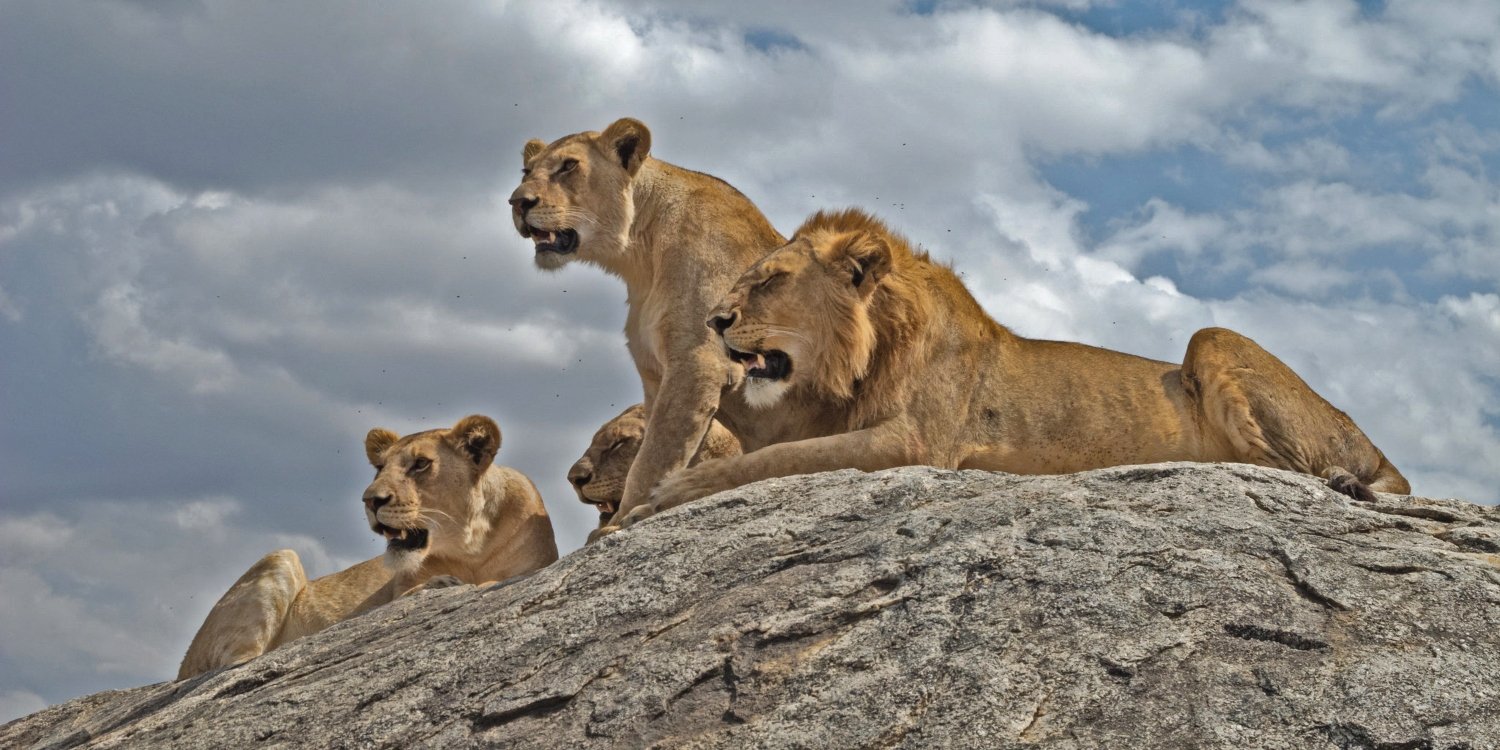
Ruaha holds around ten percent of the world's remaining lions, and the prides are among the largest anywhere in Africa — twenty or more is normal here, and larger prides have been recorded along the river. The reason is buffalo: hunting an animal that size reliably requires numbers, so the prides that can do it grow large and stay large. The park is also one of very few places offering a serious chance at all four large carnivores in one trip, with leopard along the sand rivers, hyena in numbers, cheetah on the open ground and wild dog in the woodland.
Most of the park is not the river frontage the photographs show. It is miombo — broadleaf woodland covering a large part of southern Africa and almost none of the northern circuit — subtler to game view, dispersed, and holding the species that are found nowhere else in the park. Driving into it means committing hours away from the river, which is why many visitors never do, and why it stays empty.
Access is by light aircraft from Dar es Salaam, Arusha or Nyerere, or a long drive from Iringa. It combines naturally with Nyerere into a southern circuit that never touches the northern parks at all.
What to see here
12 places inside Ruaha National Park worth planning around.
-
Pictures coming soon We are still building this gallery.
The Great Ruaha River #
The river runs along the eastern boundary of the park and is the artery of the whole ecosystem. Through the dry season it shrinks to a chain of pools in a wide sand bed, and those pools become the only water for an enormous area.
What that produces from around July to November is concentration on a scale that is hard to credit: elephant digging in the sand for filtered water, buffalo herds several hundred strong coming down in the afternoon, giraffe splayed awkwardly to drink, and predators simply waiting where they know everything must eventually come.
The river frontage is where most of the camps sit and where most game drives spend their time, and a single afternoon parked above a good pool will usually show more than a full day of driving elsewhere. In the wet season it runs properly and the animals disperse — a completely different park.
-
Pictures coming soon We are still building this gallery.
Ruaha's Lion Prides #
Ruaha holds around ten percent of the world's remaining lions, and the prides here are among the largest anywhere in Africa — groups of twenty or more are normal, and prides in the high twenties have been recorded along the river.
The reason is buffalo. Ruaha's buffalo herds are enormous, and hunting an animal that size requires numbers, so the prides that can bring down buffalo reliably grow large and stay large. Watching twenty lions organise themselves around a buffalo herd at dusk is a different order of event from a pride of five on the Serengeti plains.
The park is also one of the better places in East Africa for the other large carnivores in the same trip: leopard along the sand rivers, spotted hyena in numbers, cheetah on the open ground, and wild dog in the miombo. Very few parks offer all of them with a serious chance of each.
-
Pictures coming soon We are still building this gallery.
The Baobab Country #
Ruaha sits on the transition between the acacia savannah of East Africa and the miombo woodland of the south, and the baobabs are the most visible expression of it. They stand across the ridges and river terraces in numbers, enormous and individually distinct.
The park's elephants work them hard for moisture, and the gouging is severe enough on some trees to have hollowed them out entirely while they continue to grow. In the hour before sunset, with the light low and the trunks turning orange, the baobab ridges above the Great Ruaha are the defining view of the park.
That transitional position is also why Ruaha's species list is unusual. It is the meeting point of two faunas, and it is the reason a single drive here can produce animals a northern-circuit traveller has never seen before, alongside all the familiar ones.
-
Pictures coming soon We are still building this gallery.
Kudu, Sable and Roan #
Ruaha is the best place in Tanzania to see the large antelope that the northern circuit does not have, and for many repeat visitors they are the reason to come.
Both greater and lesser kudu are present and both are reliably found — the greater kudu bulls carrying the enormous spiralled horns that make them, by common agreement, the most striking antelope in Africa. Sable and roan are here too, in the miombo away from the river, and both are genuinely uncommon animals that require some driving to find.
Also present are the dry-country species from the north — oryx, gerenuk — alongside southern ones, which is exactly what the transitional geography produces. A guide who knows where each of them holds through the season makes a very large difference here, more than in a park where everything is on one plain.
-
Pictures coming soon We are still building this gallery.
Mwagusi and Mdonya Sand Rivers #
The tributaries that run into the Great Ruaha are dry for most of the year, and they are among the most productive places in the park precisely because of it.
The sand holds water below the surface. Elephants dig wells in the riverbed with their feet and trunks, and every other animal in the area then uses those wells — a genuinely observable piece of ecosystem engineering that happens in front of you. The riverbeds also function as roads, corridors and hunting routes, and their banks hold the dense vegetation leopard prefer.
Driving in a sand river is a different experience from driving a plain: you are down inside a corridor with walls of vegetation on both sides, animals appear at close quarters with no warning, and the tracking is exceptional because everything that has passed has left a record in the sand.
-
Pictures coming soon We are still building this gallery.
Wild Dog of the Miombo #
Ruaha, with the neighbouring Rungwa and Kizigo reserves, holds one of the most important wild dog populations left in Africa, and the miombo woodland is where they live.
They are seen less predictably than in Nyerere but they are here in numbers, and the packs range widely across a park large enough to absorb them. The best chance is the denning period around the middle of the year, when a pack settles at a den and stays; the second best is simply time, since a pack hunting can cover twenty kilometres in a morning and will eventually cross a road.
What marks a Ruaha dog sighting is the setting. Rather than open plain, you find them among miombo trees in dappled light, and the hunts run through woodland with the pack calling to keep contact — a completely different soundtrack from the northern parks.
-
Pictures coming soon We are still building this gallery.
The Miombo Woodlands #
Most of Ruaha is not the river frontage that the photographs show. It is miombo — a broadleaf woodland of brachystegia and julbernardia that covers a large part of southern and central Africa and almost none of the northern safari circuit.
It is a subtler landscape to game view and rewards patience: the animals are more dispersed and harder to see among the trees, but they include species that live nowhere else in the park, and the woodland changes character dramatically between seasons — bare and grey in the late dry months, then flushing red and copper with new leaf before the rains arrive.
Driving into the miombo means committing several hours away from the river, which is why many visitors never do. It is also where sable, roan and wild dog are, and where the park is at its emptiest and quietest.
-
Pictures coming soon We are still building this gallery.
Birding on the Ruaha #
The park's bird list runs to well over 500 species, and it carries the same transitional character as the mammals: East African species and southern African species overlapping in one place, which is unusual and much prized by birders.
The river and its pools hold the waterbirds — herons, storks, plovers, fish eagle, and the bee-eaters that nest in the sand banks in dense colonies. The woodland holds hornbills, barbets, shrikes, and the rollers that perch out on bare branches. Raptors are exceptional throughout.
From about November to April the migrants arrive and the resident birds come into breeding plumage, which coincides with the green season when large mammal viewing is at its hardest. That trade-off is worth naming plainly: the best months for birds in Ruaha are the quietest months for game, and which matters more depends entirely on the traveller.
-
Pictures coming soon We are still building this gallery.
Walking Safaris and Fly-Camping #
Ruaha is licensed for walking, and in a park this size that is a serious thing rather than a token one. You go out at first light with an armed ranger and a guide for three or four hours, usually along a sand river or a ridge, and the pace is slow enough that most of the time is spent standing still.
What the walking gives you here is the small scale of a very large place. Elephant wells dug into the sand and the tracks of everything that came to use them, the difference between a leopard's print and a lion's in dust, medicinal bark, the smell of crushed leaves, and the point at which a guide stops and quietly turns the group around. Meeting a giraffe on foot in miombo is nothing like meeting one from a vehicle.
Some camps extend it into a fly camp: a light tent or a bedroll under a net, put up for one night in the bush and taken down in the morning, with dinner on a fire and lions audible in the dark. It is uncomfortable in the way people remember for years, and Ruaha's emptiness is what makes it possible.
-
Pictures coming soon We are still building this gallery.
The Usangu Wetlands #
In 2008 the park roughly doubled in size by absorbing the Usangu basin to the south-west, a vast seasonal wetland fed by the rivers coming off the southern highlands, and it remains one of the least visited pieces of protected land in Tanzania.
Usangu matters for a reason beyond wildlife: it is the source of the Great Ruaha itself. Water drawn off the basin for irrigation upstream is why the river through the park has run dry in the late dry season in a way it did not historically, and bringing the wetland inside the park boundary was an attempt to get the whole system under one management. It is a live issue rather than a settled one.
For a visitor it is genuine frontier country. There are almost no roads, one or two seasonal camps, enormous numbers of waterbirds, and mammals that are still shy because they see so few vehicles. It is reached from the Ruaha side as an expedition of several days, and it suits travellers who want wilderness more than they want a reliable sighting.
-
Pictures coming soon We are still building this gallery.
The Escarpment and Isunkaviola #
The western half of Ruaha climbs away from the river onto a plateau at around 1,600 metres, and the Isunkaviola highlands up there are as remote as anything in the country. Almost no vehicle goes; there is one seasonal camp and a handful of tracks.
The country is different in kind rather than degree: cooler, wooded, cut by streams, and holding species that do not come down to the river, including sable, roan and the shy forest antelope of the miombo. Wild dog range through it, and the birding carries southern African species that reach their northern limit here.
Closer in, the escarpment above the Mwagusi and the ridges behind the river frontage give the park its views. Sundowners on a rock terrace with the sand river below and baobab silhouettes on the skyline is the standard Ruaha evening, and it is standard because there is very little that improves on it.
-
Pictures coming soon We are still building this gallery.
Isimila Stone Age Site #
Twenty kilometres outside Iringa, on the road most people take to reach Ruaha, a small gorge holds one of the richest Acheulean sites in East Africa. Excavations from the 1950s recovered thousands of hand axes and cleavers, along with the bones of extinct animals, from a lakebed dated to somewhere in the region of sixty to a hundred thousand years ago.
Erosion has since cut the sandstone into pillars ten metres high, standing in a dry gully like a small canyon, and you walk among them with a guide from the site office. The tools are shown in a shed of a museum which is exactly as modest as that sounds, and the guides know the material well.
It costs an hour and a very small fee, and it repositions the whole southern circuit. Iringa is worth a night on the way anyway, for the Gangilonga rock where the Hehe chief Mkwawa is said to have taken his decisions, and the drive on to Ruaha the next morning is far better than doing the whole thing from Dar in one push.